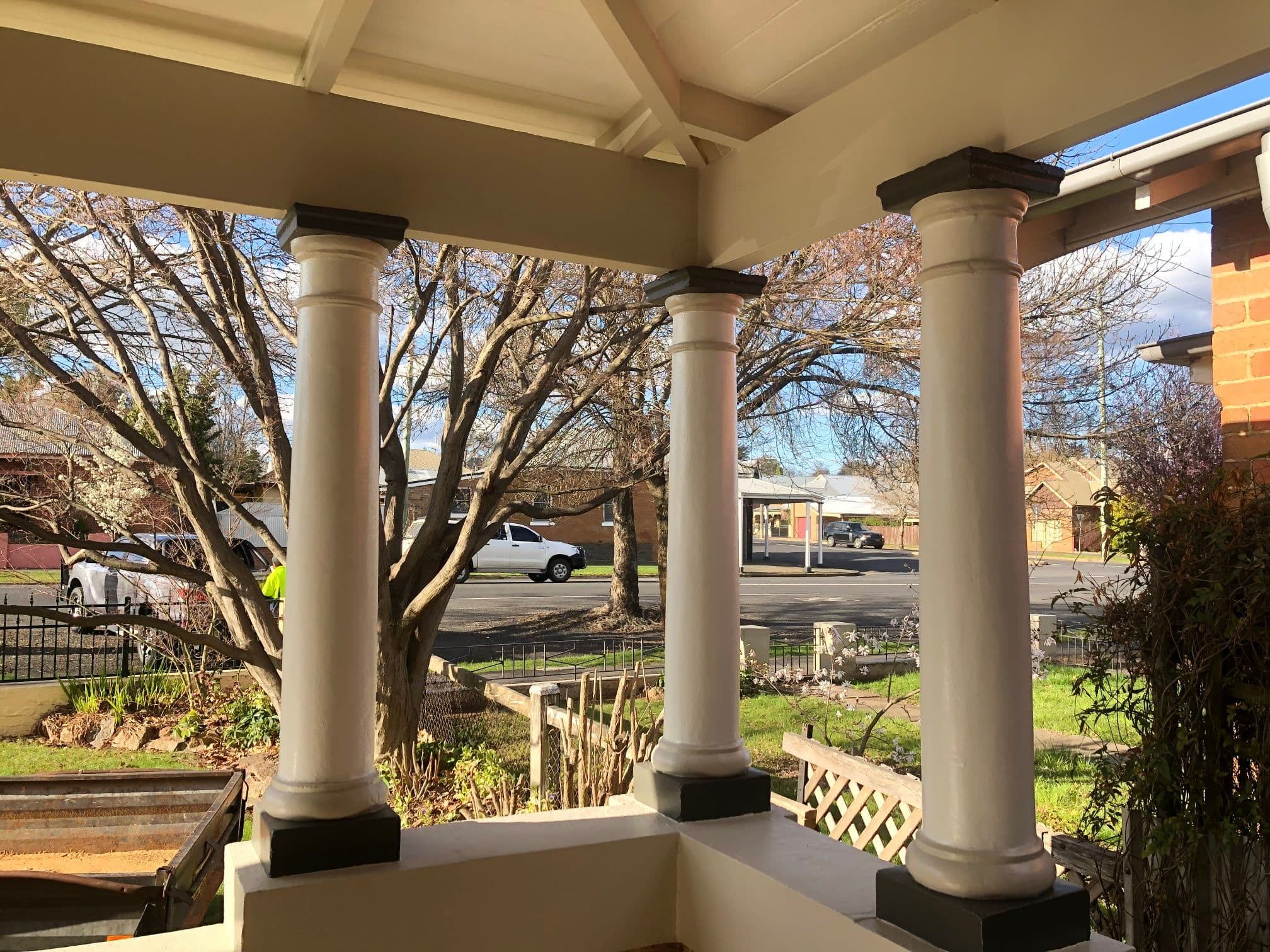
When you hire a professional painter, you should expect a thorough quote, detailed preparation that takes longer than the actual painting, clean and protected living spaces, products like Dulux applied correctly, and an owner who supervises every job. That is what separates a tradesperson from someone with a brush and a weekend to spare.
I have been painting homes and businesses across Orange, Bathurst, Millthorpe, Carcoar, andBlayney for over fifty years. In that time, I have seen every shortcut in the book, and I have seen the results of those shortcuts three or four years down the track. What I want to share here is what a proper painting job looks like from start to finish, so you know exactly what to hold your painter accountable for.
The Quote: More Than Just a Number
A professional painter will come to your property and spend real time looking at it. Not fifteen minutes. For a standard three-bedroom home in Orange, I typically spend 45 minutes to an hour on a quoting visit. I am looking at the condition of every surface, checking for moisture damage, cracking, flaking, mould, and previous paint failures. I am noting which areas get hammered by afternoon sun and which walls face south and cop the frost.
The quote itself should be itemised. You deserve to know what you are paying for. A proper quote will break down preparation, priming, coats of paint, the specific products being used, and a realistic timeline. If someone hands you a one-line quote that says "paint house, $X," keep looking.
For context, a full exterior repaint of a three-bedroom weatherboard home in the Central West typically runs between $8,000 and $15,000 depending on condition, access, and the amount of prep work required. Interior repaints for the same sized home usually sit between $5,000 and $10,000. Those numbers shift based on ceiling height, the number of rooms, and how much repair work the walls need.
Preparation: Where the Real Work Happens
Here is something most homeowners do not realise. On a typical exterior repaint, preparation accounts for 60 to 70 percent of the total job time. If your painter is spending most of their time rolling paint and very little time preparing surfaces, that is a red flag.
Preparation in the Central West means dealing with conditions you will not find in Sydney or Melbourne. At 862 metres elevation, our homes endure frost for five to eight months of the year. That freeze-thaw cycle does real damage to paint films. Summer temperatures regularly push past 35 degrees, and the UV at this altitude is relentless. All of that means surfaces need more work before fresh paint goes on.
A professional preparation process includes:
- Pressure washing to remove dirt, mould, cobwebs, and loose material. This alone can take a full day on a larger home.
- Scraping and sanding all flaking or peeling paint back to a sound edge. We do not paint over failures. We remove them.
- Filling and patching cracks, nail holes, dents, and damaged timber. In older homes around Millthorpe and Carcoar, this can be extensive work, especially on original weatherboards and window frames.
- Caulking gaps around windows, doors, and joints where moisture can penetrate.
- Priming all bare timber, filler, and problem areas with the correct primer. Dulux makes specific primers for different substrates, and using the right one matters enormously for adhesion and longevity.
- Sanding between coats to create a mechanical bond and a smooth finish.
If a painter tells you they can start and finish an exterior in two days, be cautious. A thorough exterior repaint on a three-bedroom home typically takes five to eight working days. Cutting that short means cutting preparation, and cutting preparation means the job will not last.
Protecting Your Property
Before any paint is opened, a professional painter will protect everything that is not being painted. Drop sheets over floors, furniture moved and covered, masking tape on edges and fittings, plastic over light switches and power points. Outside, your garden beds, paths, and vehicles should be covered or moved clear.
This is not optional. Paint splatter on your floorboards or your car is not an accident. It is negligence. A proper setup takes time, sometimes half a day for a large interior job, but it is non-negotiable.
At the end of each working day, a professional crew will tidy the site. Tools packed away, drop sheets folded or repositioned, and the work area left safe and accessible for your family. You should be able to live in your home while interior work is happening, with minimal disruption.
The Paint Itself
I use Dulux products almost exclusively, and I have done for decades. There is a reason for that. Dulux manufactures paint specifically formulated for Australian conditions, and their Weathershield range is designed to handle exactly the kind of UV exposure and temperature swings we get in the Central West.
A professional painter will apply a minimum of two full coats of topcoat over a properly primed surface. On exterior work, I often apply three coats on north and west-facing walls because those surfaces take the worst punishment from sun and weather. Each coat needs adequate drying time between applications, typically four to six hours depending on temperature and humidity.
You should always ask your painter what products they are using. A professional will be happy to tell you the exact product names and show you the tins. If they are vague about it, that is worth questioning. Cheaper trade paints might save the painter money on materials, but they will cost you in longevity and finish quality.
Communication and Supervision
One of the most common complaints I hear from homeowners who have had a bad experience with another painter is that they never saw the boss. A crew turned up, the owner was nowhere to be found, and the result was disappointing.
I supervise every job personally. That is not a marketing line. It is how I have operated for over fifty years. I am on site checking preparation, inspecting surfaces before paint goes on, and making sure the finish meets my standard. When you are paying thousands of dollars for a paint job, the person whose name is on the business should be the one standing behind the work.
Good communication also means keeping you informed. You should know the schedule before work begins, be told about any unexpected issues as they arise, and have a clear point of contact throughout the job. If your painter discovers rotten timber behind a fascia board in Bathurst, you should know about it that day, not find out when the invoice arrives with an unexplained surcharge.
The Finish and Final Inspection
When the painting is done, a professional will walk through the completed job with you. This is your chance to inspect every surface in good light and point out anything you are not happy with. Touch-ups, missed spots, and imperfections should be addressed before the final payment is made.
A quality paint job should look clean and even with no visible brush marks, roller lines, drips, or uneven coverage. Cut-in lines along ceilings, architraves, and skirting boards should be sharp and straight. Doors and windows should open and close freely without sticking.
After the inspection, the site should be left clean. All masking removed, drop sheets cleared, paint tins and rubbish taken away, and your furniture returned to its original position. You should not have to clean up after your painter.
How Long Should a Professional Paint Job Last?
With proper preparation and quality Dulux products, an exterior paint job in the Central West should last 10 to 15 years. Interior work should last even longer, typically 15 to 20 years in low-traffic areas and 8 to 12 years in high-traffic zones like hallways and kitchens.
Those numbers assume the work was done properly. Skipped preparation, cheap paint, or painting in the wrong conditions will cut that lifespan dramatically. I have seen exterior jobs fail in under three years because the painter did not prime bare timber or applied paint on a frosty morning in Blayney.
What to Look for When Choosing a Painter
- Proper licensing and insurance. In NSW, any painting work over $5,000 requires a licensed contractor. Ask to see their licence number.
- Detailed, written quotes. Not verbal estimates. A proper quote with scope, products, and timeline.
- References or examples of recent work. A painter who has been in business for years should have no trouble showing you completed jobs.
- Owner involvement. Ask whether the business owner will be on site during your job.
- Product transparency. They should tell you exactly which paints and primers they plan to use.
If you are in Orange, Bathurst, Millthorpe, Carcoar, Blayney, or anywhere across the Central West and you are thinking about getting your home or business painted, Murrays Painting offers free, no-obligation quotes. I will come out to your property, assess the work, and give you an honest, itemised quote with no surprises. Give us a call and let us show you what fifty years of experience looks like on your walls.