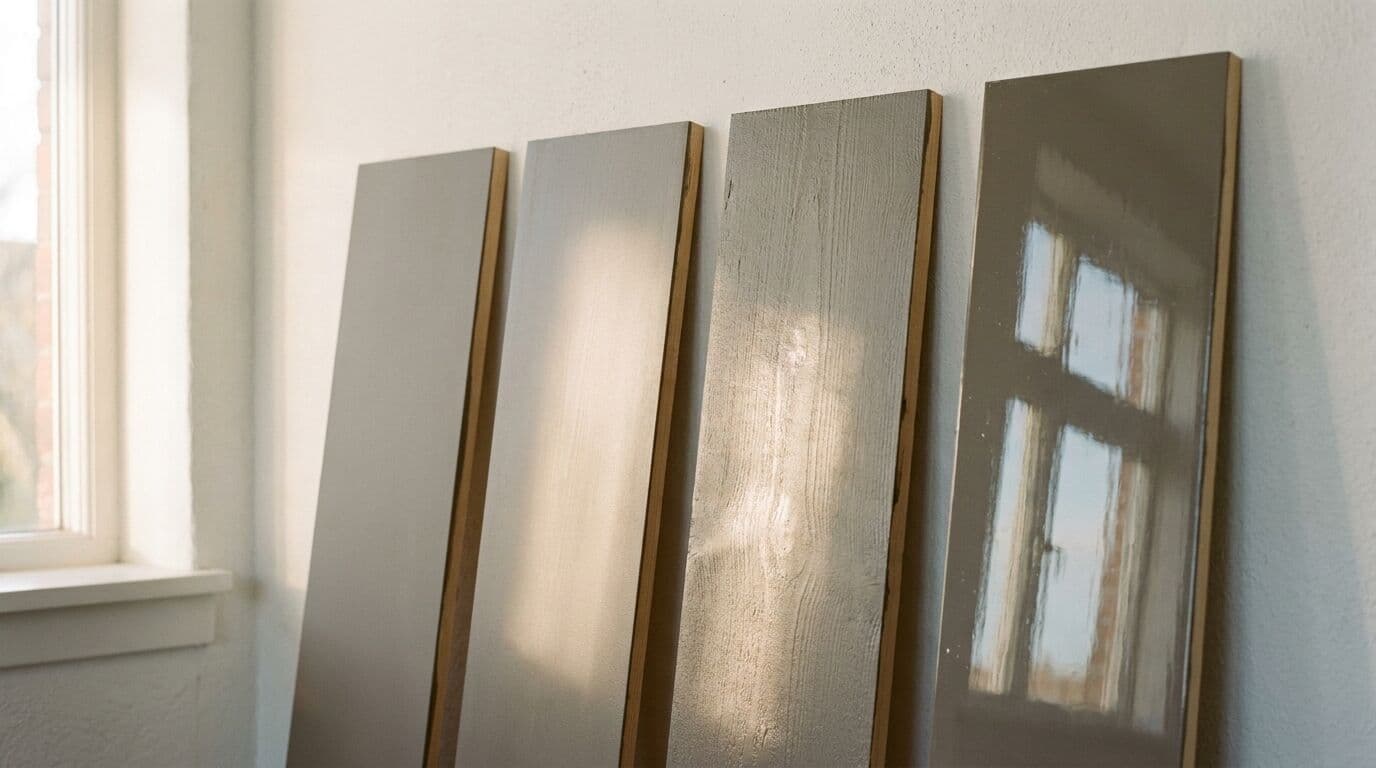
Paint finish, sometimes called sheen, determines how much light a painted surface reflects and how it performs over time. The four main finishes are flat, low sheen, semi-gloss, and gloss. Each has a specific purpose, and choosing the wrong one for a room or surface will cost you time and money. After fifty years painting homes across Orange, Bathurst, Millthorpe, and the wider Central West, I can tell you that finish selection matters just as much as colour selection.
Most homeowners spend weeks agonising over colour, then barely glance at the finish. That is a mistake. The finish affects how the paint looks on the wall, how easy it is to clean, how long it lasts, and how well it hides imperfections. Get the finish right and your paint job will look professional for years. Get it wrong and you will be looking at marks, peeling, or a room that just does not feel right.
Flat Finish: The Forgiving One
Flat finish, also called matt, reflects almost no light. It absorbs it, which gives walls a smooth, velvety appearance. This is the finish I recommend most often for ceilings and for living areas in homes where the walls have some age to them. If your walls have minor cracks, patched areas, or slight undulations, flat finish will hide those imperfections better than any other sheen level.
The trade-off is durability. Flat finishes are harder to clean because they absorb marks rather than letting you wipe them off. In a hallway where the kids run their hands along the wall, or in a kitchen where grease splatters travel further than you would think, flat paint will show every touch. I have seen flat-finished hallways in family homes in Orange that needed repainting within two years simply because of traffic marks that would not wash off.
Where flat works beautifully is on ceilings throughout the home, in formal living rooms, master bedrooms, and any room where the walls are not going to cop regular contact. For ceilings specifically, flat is the only finish I use. The Dulux Ceiling White in flat is an industry standard for good reason. It eliminates glare from downlights and hides the joins in plasterboard sheets that even the best plasterers leave behind.
Low Sheen: The Workhorse
If I had to pick one finish for an entire house, it would be low sheen. This is the finish that balances appearance with practicality. It reflects a small amount of light, just enough to give walls a subtle warmth without highlighting every bump and imperfection.
Low sheen is washable. Not as scrub-resistant as semi-gloss, but more than adequate for wiping away fingerprints, scuff marks, and the general grime that accumulates in a busy household. I recommend Dulux Wash and Wear in low sheen for most interior walls. It is the product I have used on hundreds of homes across the Central West, and it performs consistently well in our climate.
Our conditions in Orange and surrounds are worth considering here. At 862 metres elevation, we get five to eight months of frost, then summers that push past 35 degrees with intense UV. Interior walls in homes without adequate insulation can experience significant temperature swings. Low sheen handles that movement well. It is flexible enough to expand and contract without cracking, which is more than I can say for some high-gloss finishes I have seen fail on interior feature walls.
For most of my jobs in Orange, Bathurst, and Blayney, the specification is straightforward: flat on ceilings, low sheen on walls. That combination covers about 70 percent of the residential interiors I paint.
Semi-Gloss: Built for Bathrooms, Kitchens, and Trim
Semi-gloss reflects noticeably more light than low sheen. It has a visible shine that gives surfaces a clean, crisp look. More importantly, it is highly durable and very easy to clean. A damp cloth will remove almost anything from a semi-gloss surface without damaging the paint film.
I use semi-gloss in three main areas:
- Bathrooms and laundries, where moisture resistance is critical. Semi-gloss creates a harder film that resists water penetration far better than flat or low sheen. In a bathroom without an exhaust fan, which I still see regularly in older homes around Millthorpe and Carcoar, semi-gloss can be the difference between paint that lasts and paint that peels within twelve months.
- Kitchens, particularly the walls behind the stove and sink. Grease, steam, and food splatter are daily realities in a kitchen, and semi-gloss lets you wipe those surfaces clean without wearing through the paint.
- Interior trim, doors, and architraves. These are the surfaces that get the most physical contact in any home. Door frames get bumped, skirting boards get kicked, and window frames accumulate condensation in our cold winters. Semi-gloss on these surfaces in a quality enamel like Dulux Aquanamel will last eight to ten years with proper preparation.
The important thing to understand about semi-gloss is that it shows imperfections. Every dent, every poorly filled nail hole, every uneven plaster patch will be visible because the sheen catches the light across those surfaces. This is why preparation is so important when using higher sheen finishes. On a typical three-bedroom home in Orange, I budget two to three full days just for preparation before any paint goes on the trim. That means filling, sanding, spot-priming, and sometimes stripping back old paint entirely. It is the work most people never see, but it is the difference between a paint job that looks sharp and one that looks rushed.
Gloss: Maximum Durability, Maximum Demands
Full gloss is the highest sheen level. It creates an almost mirror-like finish that reflects light strongly. It is the toughest, most washable, and most moisture-resistant finish available. It is also the least forgiving.
I use gloss sparingly these days. Twenty or thirty years ago, full gloss on all interior woodwork was standard. You would walk into any home in Bathurst or Orange and every door, every skirting board, every window frame was painted in high-gloss enamel. The look was traditional and it wore well. But tastes have shifted, and most homeowners now prefer the softer look of semi-gloss or even satin on their trim.
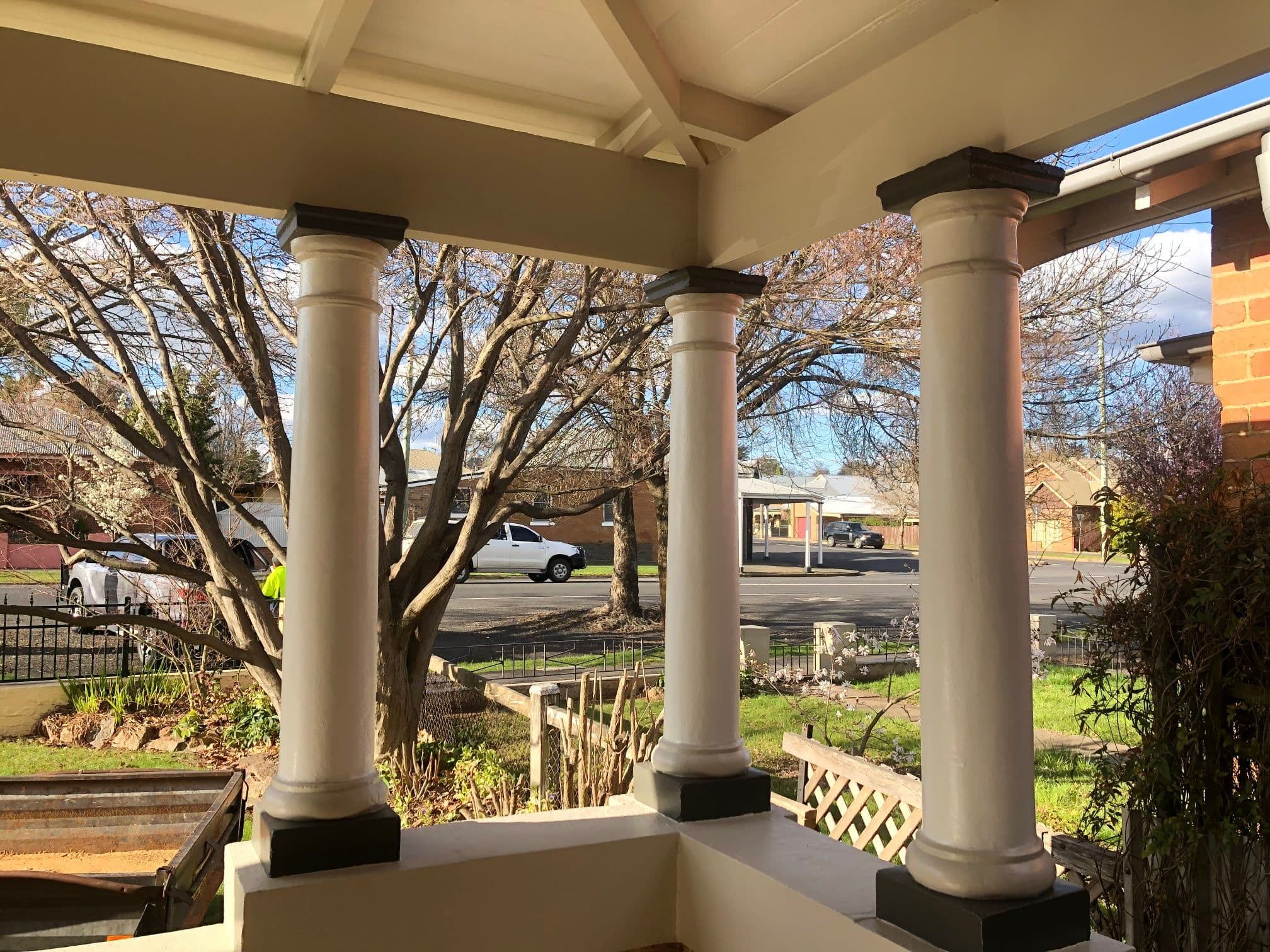
Where gloss still makes sense is on exterior surfaces that take a beating. Front doors, exterior handrails, and metal surfaces like gates and downpipes all benefit from the hard, protective shell that gloss provides. On exterior metal in our climate, where frost and UV alternate relentlessly, a full gloss enamel over a proper metal primer will outperform any lower sheen option.
The preparation required for gloss is even more demanding than for semi-gloss. Every imperfection is magnified. I tell homeowners that if you want a professional gloss finish, you need to be prepared to pay for the preparation time. On a single front door, that might mean stripping the old paint back to bare timber, filling any grain, applying an undercoat, sanding that back, then applying two coats of gloss with light sanding between coats. That is the better part of a day for one door, but the result is worth it.
Exterior Finishes: A Different Calculation
Exterior paint selection follows different rules. Out here in the Central West, the weather dictates everything. At 862 metres elevation, we deal with UV levels that break down paint film faster than coastal areas, frost that gets into any crack and lifts the paint from the substrate, and summer heat that softens cheaper products.
For exterior walls, whether they are weatherboard, rendered brick, or fibre cement, I generally recommend a low sheen acrylic. Dulux Weathershield in low sheen is my standard exterior specification. It handles UV, it breathes well enough to let moisture escape from the substrate, and it maintains its colour longer than flat alternatives. A quality exterior low sheen, properly applied over the right primer with thorough surface preparation, should last ten to fifteen years on a home in Orange.
For exterior trim, I step up to semi-gloss or gloss in an exterior-grade enamel. These surfaces need the extra hardness and washability that higher sheens provide. Fascias, barges, window frames, and verandah posts all take direct weather exposure, and the harder film of semi-gloss or gloss stands up to that punishment better.
Common Mistakes I See
In fifty years of painting, I have seen the same finish mistakes repeated across hundreds of homes. Here are the ones that cost homeowners the most:
- Flat paint in a hallway or children's room. It will show every mark within months. Low sheen is the minimum for any high-traffic area.
- Low sheen in a bathroom without ventilation. Moisture will get behind the paint film and cause peeling. Semi-gloss is essential in wet areas.
- Gloss on walls with imperfections. Unless the walls are perfectly smooth, gloss will highlight every flaw. I have been called back to repaint feature walls where a homeowner chose gloss and then realised every plaster joint was visible.
- Mixing finishes without thinking it through. If your walls are low sheen and your trim is flat, the room will look unfinished. The trim should always be at least one sheen level above the walls.
- Skipping primer before changing sheen levels. Going from gloss to flat, or flat to gloss, without an appropriate primer coat will cause adhesion problems. The new paint either will not stick or will look patchy.
What I Recommend for Most Homes
After all these years, my standard recommendation for a residential repaint in the Central West has not changed much. For a typical three or four-bedroom home in Orange, Bathurst, Millthorpe, Blayney, or Carcoar, I suggest:
- Ceilings: Flat white. Dulux Ceiling White is the go-to product.
- Interior walls: Low sheen in your chosen colour. Dulux Wash and Wear Low Sheen for most rooms.
- Bathrooms, laundry, and kitchen walls: Semi-gloss for moisture and grease resistance.
- Interior trim, doors, and architraves: Semi-gloss enamel. Dulux Aquanamel in semi-gloss.
- Exterior walls: Low sheen acrylic. Dulux Weathershield Low Sheen.
- Exterior trim: Semi-gloss or gloss enamel, depending on the look you want.
Every job I supervise personally follows this kind of specification, tailored to the individual home. The product choices are based on decades of seeing what lasts in our climate and what does not. Preparation is always the foundation. No finish, no matter how premium, will perform well over a poorly prepared surface.
If you are planning a repaint and are not sure which finishes are right for your home, I am happy to walk through the options with you on site. Murray's Painting offers free, no obligation quotes across Orange, Bathurst, Millthorpe, Blayney, Carcoar, and the wider Central West. Every job is owner-supervised and completed to the standard your home deserves.Give us a call and let's get it sorted.