Painting a heritage home in Millthorpe, Carcoar, or Blayney is not the same as painting a modern house. These villages hold some of the finest 19th century architecture in Central West NSW, and getting the paint right means understanding lime renders, old timber joinery, and colour schemes that respect the period. After more than fifty years of painting across Orange, Bathurst, and the surrounding towns, I have worked on dozens of heritage properties in this region, and the lessons are always the same. Preparation is everything, the right products matter, and rushing the job will cost you more in the long run.
Why Heritage Homes Need a Different Approach
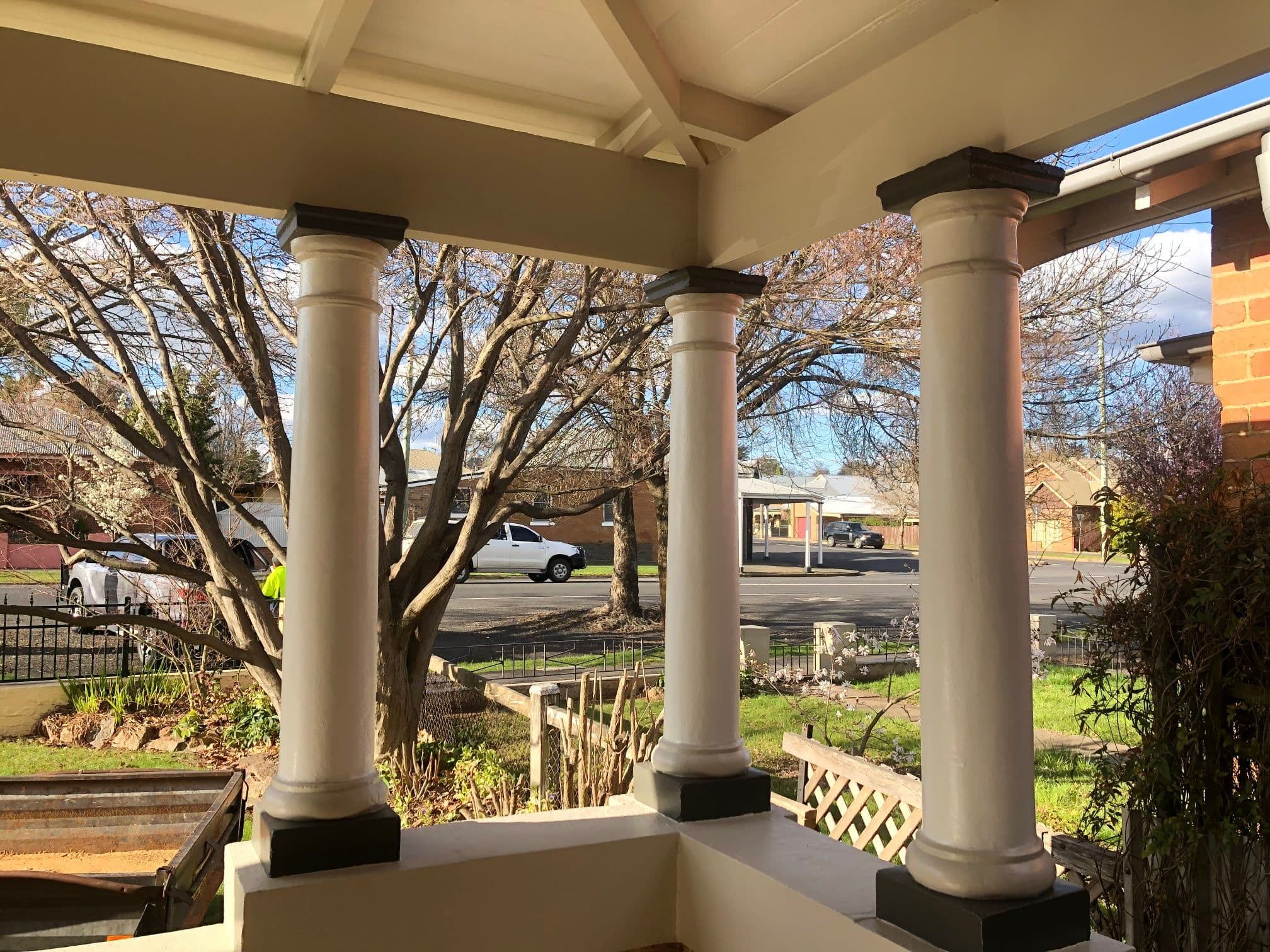
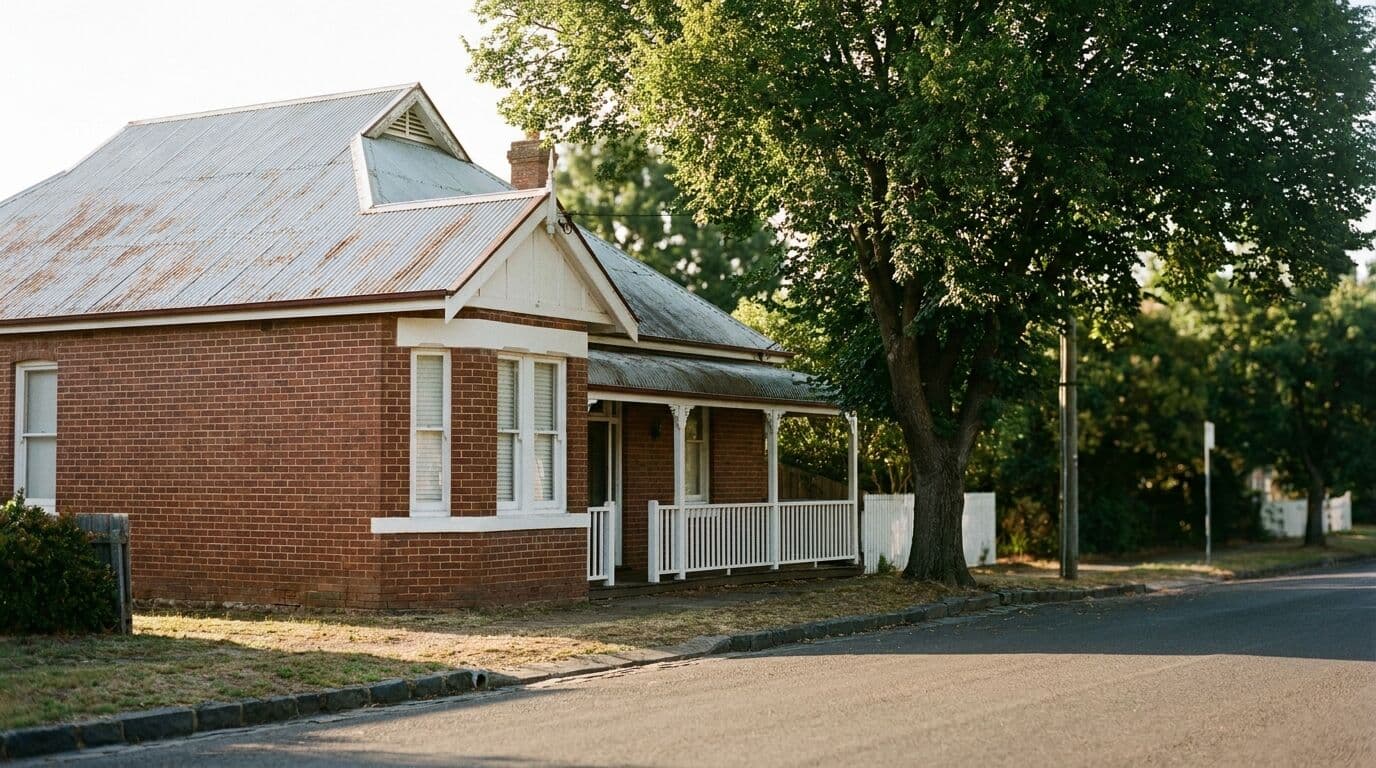
A typical modern home has hardiplank or rendered brick, factory-applied primer, and relatively straightforward surfaces. A heritage home in Millthorpe or Carcoar might have hand-applied lime render over soft brick, original timber weatherboards with lead paint underneath, decorative timber fretwork, pressed metal verandah ceilings, and cast iron lacework. Every one of those surfaces needs to be treated differently.
I see problems every year from painters who treat a heritage home like any other job. They pressure wash a lime render and blow it off the wall. They slap acrylic straight over old oil paint without keying the surface. They fill original timber joinery with builders bog instead of an appropriate timber filler, and within twelve months the filler has cracked and popped out because it cannot flex with the timber as it expands and contracts through our seasons.
At 862 metres elevation, Orange and the surrounding towns experience frost for five to eight months of the year, summer temperatures past 35 degrees, and UV levels that are punishing on any coating. Heritage homes have survived that climate for 100 to 150 years precisely because the original builders understood their materials. A good heritage painter needs that same understanding.
Millthorpe: A Village Worth Preserving
Millthorpe is only about 20 minutes south of Orange, and it is one of the best preserved heritage villages in New South Wales. The main street is heritage listed, and many of the residential properties in and around the village date from the 1860s through to the early 1900s. When you take on a painting job in Millthorpe, you are working with buildings that have genuine historical significance.
I have painted several properties in Millthorpe over the years, and the common challenge is that many of these homes have had multiple paint jobs layered on top of each other over the decades. You might find six or seven layers of paint, some oil-based, some acrylic, some applied properly and some not. Before a single coat of fresh paint goes on, we need to assess what is underneath. That means careful scraping, sanding, and in some cases chemical stripping to get back to a stable base.
If the property is heritage listed, there may be council requirements around colour selection and the scope of work. Blayney Shire Council, which covers Millthorpe, has heritage guidelines that specify appropriate colour palettes and can require development consent for changes to the external appearance of listed buildings. We always advise homeowners to check with council before finalising colours.
Carcoar: Australia's Third Oldest Settlement
Carcoar sits about 50 minutes south-west of Orange, and it holds the distinction of being the third oldest European settlement west of the Blue Mountains. The entire village is classified by the National Trust, and the streetscape has remained remarkably intact since the 1860s. Working on a home in Carcoar comes with a real sense of responsibility.
The buildings in Carcoar tend to be smaller cottages, many built from local stone with timber window frames, doors, and verandah posts. The stone itself does not get painted in most cases, but the mortar joints, timber elements, and any rendered sections all need attention. One challenge specific to Carcoar is its position in the valley of the Belubula River, which means it can be slightly more humid than Orange or Millthorpe, and morning dew and frost linger longer in the cooler months. That affects our scheduling. We rarely start applying paint before mid-morning during autumn and spring, and winter exterior work is generally off the table entirely.
Blayney: The Hub Between
Blayney sits between Orange and Carcoar and has its own collection of heritage buildings, both residential and commercial. The town has been growing steadily, and more property owners are investing in restoring older homes rather than demolishing them. That is something I am glad to see.
Heritage homes in Blayney often have a mix of original and altered sections. A common scenario is a Victorian era front with a mid-century addition at the back, each requiring different preparation and paint systems. We treat each section on its merits rather than trying to apply a one-size-fits-all approach.
Preparation: Where Heritage Jobs Are Won or Lost
On a standard modern home, preparation might account for 30 to 40 percent of the total job time. On a heritage property, it is closer to 50 to 60 percent. That is not padding. That is the reality of dealing with old substrates, multiple paint layers, and surfaces that have been exposed to Central West weather for a century or more.
Here is what heritage preparation typically involves.
- Lead paint assessment: Any home built before 1970 may have lead paint. Homes built before 1950 almost certainly do. We follow safe work practices for lead paint removal, including containment, wet sanding, and appropriate disposal. This is not optional. It is a legal requirement and a health issue, particularly if the home has children or the occupants are living in the house during the work.
- Timber inspection: Old timber window sills, fascia boards, and verandah posts can have hidden rot beneath the paint. We probe every timber surface before we start. Minor rot gets treated with timber hardener and filled. Severely rotted sections get replaced with matching timber profiles where possible.
- Render assessment: Lime render is softer and more breathable than modern cement render. It needs to be treated gently. We never pressure wash lime render. Instead, we brush it down and spot-repair any blown or cracked sections with a compatible lime-based repair mortar. Painting over cracked or hollow render is a waste of money because the render will continue to deteriorate underneath.
- Surface keying and priming: Glossy old oil paint needs to be sanded to provide a key for the new paint system. Bare timber gets a dedicated primer. Patched render gets a sealer coat. Every surface gets the right primer for what it is and what is going over it.
I supervise all of this personally. On a heritage job, the preparation decisions made in the first few days determine whether the paint lasts three years or fifteen. That is not something I hand off.
Choosing the Right Paint System
For heritage exteriors, we predominantly use Dulux products. Their Weathershield range is specifically formulated for Australian conditions, and the 15-year durability warranty gives homeowners confidence. For heritage colours, the Dulux Heritage colour range includes historically appropriate shades that suit the period of most Central West homes.
One question I get regularly is whether to use oil-based or water-based paint on heritage homes. Thirty years ago, oil-based was the default for exterior timber. Today, high-quality acrylic products like Dulux Weathershield have largely replaced oil-based paints for exterior work. They are more flexible, more UV resistant, and they breathe better, which matters on old buildings where moisture management is critical. However, there are still situations where an oil-based undercoat is the right choice, particularly over old oil-based paint systems or on timber that has been previously oiled.
For lime-rendered walls, breathability is essential. You cannot seal a lime wall with a non-breathable coating or moisture will get trapped behind the paint, causing the render to blow and the paint to blister. We use mineral-based or high-breathability masonry paints on these surfaces.
Heritage Colour Selection
Colour is where heritage painting gets personal. Every era had its own palette. A Georgian cottage from the 1840s looks wrong in Federation colours, and a Federation villa from 1905 looks wrong in mid-century tones. Getting the period right matters, both for the integrity of the building and, in many cases, for council compliance.
As a general guide for the Central West region, here is what we typically see.
- 1840s to 1870s (Colonial and Georgian): Simple palettes. Stone or cream walls, dark green or dark red for joinery, white or off-white for window sashes.
- 1880s to 1900s (Victorian): Richer, deeper colours. Burgundy, dark green, Indian red, and cream. Decorative elements often picked out in contrasting tones.
- 1900s to 1920s (Federation): Earthy reds, greens, and creams. Verandah posts and fretwork often in two or three complementary colours. Roof colours typically dark red or green.
We always do large sample patches on the actual building before committing to a full colour scheme. Colours look completely different at 862 metres elevation under Central West light compared to how they look on a colour chart in a paint shop. A colour that looks perfect on a small swatch can look completely wrong at scale on a building face. We paint a section at least one metre square and live with it for a day or two before proceeding.
What a Heritage Exterior Costs
Heritage painting costs more than painting a modern home of equivalent size, and it is important to understand why. The additional preparation, the care required with old substrates, lead paint management, and the slower pace of work on decorative elements all add time and therefore cost.
As a rough guide, a full exterior repaint of a heritage cottage in Millthorpe, Carcoar, or Blayney might run from $15,000 to $30,000 depending on the size of the home, the condition of the existing surfaces, and the complexity of the decorative elements. A larger heritage property with extensive verandahs, decorative fretwork, and multiple elevations can go higher. The preparation component on these jobs is significant, but it is also what makes the difference between a paint job that lasts and one that peels within a few years.
We provide detailed written quotes that break down the scope of work so you can see exactly what is included. No surprises.
Timing Heritage Work in the Central West
The same seasonal rules that apply to any exterior painting in the Central West apply doubly to heritage work. Spring and autumn are the ideal windows. Heritage homes, with their older substrates and more complex surfaces, are even more sensitive to temperature and moisture during the curing process.
A typical heritage exterior takes two to four weeks depending on the size and condition of the property. We book these jobs for the best weather windows and build in flexibility for the inevitable days when conditions are not right. It is better to pause for a day than to push paint onto a cold or damp surface that will not cure properly.
Protecting What Matters
The heritage homes in Millthorpe, Carcoar, and Blayney are not just buildings. They are part of the story of the Central West. Every time we paint one, we are adding another layer of protection that will carry that building forward for another decade or more. That is something I take seriously, and it is why I personally oversee every heritage job we take on.
If you own a heritage property in the Central West and you are thinking about painting, give Murrays Painting a call or fill out the enquiry form for a free quote. We will come out, assess your property, talk through the preparation and colour options, and give you a clear picture of what is involved. No obligation, just honest advice from someone who has been doing this for more than fifty years.