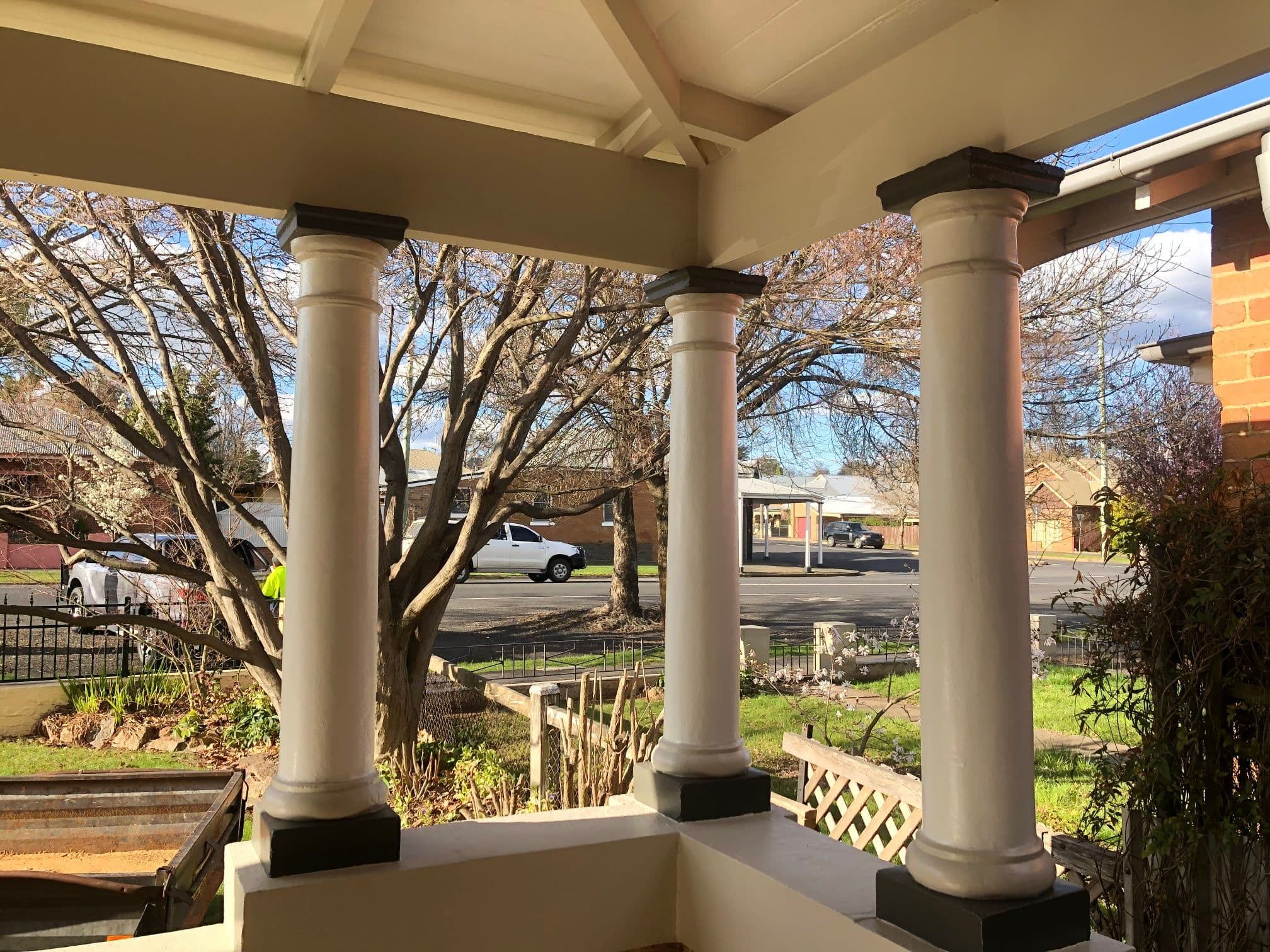
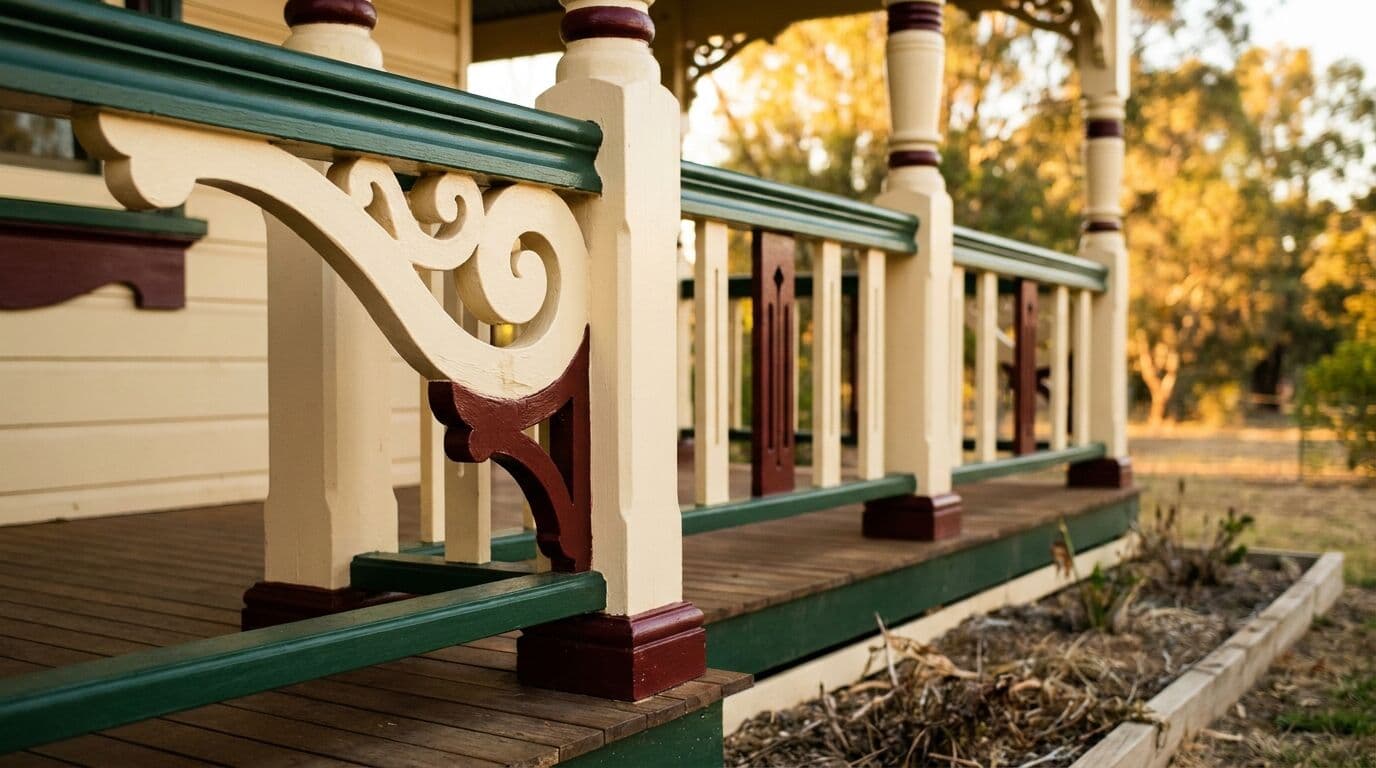
Painting a federation home properly means understanding the details that make these houses special, then choosing materials and techniques that protect them for another century. After fifty years of painting federation homes across Orange, Bathurst, Millthorpe, and the surrounding Central West, I have learned that the right preparation and colour choices can bring a tired federation facade back to life, while the wrong approach can strip away the very character you are trying to preserve.
The Central West is full of beautiful federation homes built between 1890 and 1915. You will find them lining the streets of Orange, scattered through the heritage precincts of Carcoarand Millthorpe, and standing proudly on larger blocks around Blayney and Bathurst. They were built to last, and with the right paint job, they will keep standing beautifully for generations to come.
What Makes Federation Homes Different to Paint
Federation homes are not just old houses. They have specific architectural features that demand a particular painting approach. You are typically dealing with detailed timber fretwork, turned verandah posts, decorative eaves brackets, pressed metal ceilings on verandahs, and weatherboard or brick exteriors with contrasting trim. Some have roughcast render, others have exposed face brick with painted lintels and sills.
Every one of these elements needs to be treated individually. A painter who rolls everything in one colour with one sheen is doing your home a disservice. The fretwork needs careful brush work. The weatherboards need a different preparation approach to rendered walls. And the colour scheme needs to respect the era while protecting against our harsh Central West climate.
Preparation Is Everything
I say this on every job, but it is especially true with federation homes. On a typical federation exterior, preparation takes longer than the actual painting. That is not a complaint. That is how it should be.
Here is what proper preparation looks like on a federation home:
- Full inspection of all timber: Federation homes often have 120-plus years of paint layers. Some of those early layers may contain lead paint. We test for lead paint on every federation job, and if it is present, we follow the proper containment and removal procedures. This is not optional. It is a safety requirement.
- Scraping and sanding: Any flaking, peeling, or cracked paint has to come off. On detailed fretwork and turned posts, this is painstaking hand work. You cannot shortcut it with a heat gun on delicate timber profiles without risking damage.
- Timber repairs: After a century of Central West weather, sitting at 862 metres elevation with frost five to eight months of the year, timber components will have some deterioration. Sills, fascia ends, and the base of verandah posts are the usual trouble spots. We repair or splice in new timber to match the original profiles before any paint goes on.
- Filling and caulking: Every gap, crack, and nail hole gets filled with a flexible exterior filler. Rigid fillers crack within a season up here because of the temperature swings, from minus three on a winter morning to past 35 degrees in a February afternoon.
- Priming bare timber and repairs: Any bare timber gets a dedicated primer coat. We use Dulux primers matched to the topcoat system. This step is critical for adhesion and longevity, especially on hardwood timbers like the ironbark and tallowwood commonly used in federation construction.
On a standard three-bedroom federation home, preparation alone typically takes three to five days for the exterior. If someone quotes you a full exterior repaint in two days including prep, they are cutting corners.
Choosing the Right Paint System
For federation exteriors in the Central West, I recommend Dulux Weathershield as the topcoat system. It is formulated for Australian conditions and holds up well against our UV exposure, which is significant at this elevation. The UV index in Orange regularly hits extreme levels through summer, and cheaper paints fade and chalk noticeably within three to four years.
For the paint system, you are looking at a minimum of three coats on bare or heavily prepared surfaces: one primer, two topcoats. On previously painted surfaces in good condition, two topcoats over a clean, sanded surface will do the job. I always recommend a low sheen or satin finish for weatherboards and rendered walls, and a semi-gloss for all trim, doors, and window frames. The contrast in sheen is part of what gives a federation home its depth and character.
Getting Your Colour Scheme Right
This is where federation homes really come alive, or fall flat. The original federation palette was rich and layered. These homes were never meant to be painted in a single colour. A proper federation scheme uses three to five colours: a body colour, a trim colour, a darker accent for window sashes and doors, and often a feature colour for fretwork or decorative elements.
Some combinations I have seen work beautifully on homes around Orange and Millthorpe:
- Deep red oxide body with cream trim and dark green sashes. This is a classic Central West look that suits both brick and weatherboard federation homes.
- Soft sage green body with white trim and burgundy accents. This works particularly well on weatherboard homes with detailed fretwork.
- Warm sandstone body with Indian red trim and deep cream sashes. You see this palette reflected in the heritage buildings through Carcoar and Millthorpe.
- Federation cream body with heritage green trim and chocolate brown accents. A timeless scheme that suits the streetscapes around the older parts of Orangeand Bathurst.
Dulux has a dedicated heritage colour range that takes the guesswork out of this. I always recommend getting a few sample pots and testing them on the actual wall before committing. Colours look completely different on a shaded verandah wall versus a sun-drenched western elevation.
Interior Considerations for Federation Homes
Federation interiors have their own requirements. High ceilings, picture rails, decorative cornices, ceiling roses, and timber skirtings all need careful attention. The good news is that interior painting is not subject to the same climate pressures as exterior work, so we can tackle interiors year-round.
The key interior challenges on federation homes are the height, with ceilings commonly 3 to 3.6 metres, and the detail work on cornices and roses. We use Dulux Wash and Wear for interior walls, which stands up well to cleaning without losing its finish. Ceilings get a flat white in Dulux ceiling paint, and all timber trim gets a semi-gloss enamel for durability and a clean finish.
Budget around $12,000 to $20,000 for a full interior repaint of a three-bedroom federation home, depending on ceiling height, the condition of existing surfaces, and how much detail work is involved. Homes with elaborate plaster detailing take considerably more time and care.
Timeframes and What to Expect
A full exterior repaint of a federation home, done properly, typically takes two to three weeks. That includes preparation, timber repairs, priming, and two topcoats across all surfaces. A full interior takes one to two weeks depending on the size and complexity.
I supervise every federation job personally. These homes deserve an experienced eye on the details. It is too easy for a less experienced painter to fill over a detail that should be preserved, or to miss rot behind a decorative bracket that will cause problems in two years. Every job we do is owner-supervised from start to finish.
For exterior work, the best window is late spring through autumn, roughly September to April, when overnight temperatures stay above 10 degrees and we can get reliable curing. Winter painting is possible on north-facing walls on milder days, but I would rather wait for proper conditions than risk a premature failure.
Protecting Your Investment
A well-painted federation home in the Central West should hold up for 10 to 15 years on the exterior before needing a full repaint, provided the preparation was thorough and quality paint was used. Interior work lasts even longer, often 15 to 20 years in living areas and longer in bedrooms.
Between full repaints, keep an eye on the western and northern elevations, which cop the worst of our UV and weather. Touch up any chips or cracks promptly before moisture gets into the timber. A small touch-up today saves a major repair bill in five years.
If you own a federation home in Orange, Bathurst, Millthorpe, Blayney, or anywhere across the Central West and you are thinking about a repaint, we offer free, no-obligation quotes. I will come out, inspect the property, talk through colour options, and give you an honest assessment of what needs doing. Give Murrays Painting a call and let us help you bring your federation home back to its best.