Textured wallpaper is making a comeback in 2026 because homeowners are craving warmth, depth, and character that flat painted walls simply cannot deliver. After fifty plus years of painting and wallpapering homes across Orange, Bathurst, and the Central West, I have seen wallpaper go from every room in the house, to completely out of fashion, and now back again. But this time around, the products are better, the patterns are more refined, and the results are genuinely impressive.
I will be honest. For a good twenty years, if someone mentioned wallpaper, most painters would quietly groan. We spent the 1990s and early 2000s stripping the stuff off walls. Layer after layer of floral prints, foil papers, and vinyl coverings that had been slapped up in the 1970s and 1980s. But what is happening now is completely different. Modern textured wallpapers are a design choice, not a shortcut, and they are turning up in some of the most beautifully renovated homes I work in across Millthorpe, Carcoar, and Blayney.
What Has Changed About Wallpaper in 2026
The wallpaper available today is nothing like what your parents or grandparents had on their walls. Modern textured wallpapers use materials like grasscloth, linen, jute, and even cork to create a tactile surface that adds genuine depth to a room. Some are paste-the-wall products, which makes installation faster and cleaner. Others are peel-and-stick, though I would caution against those for long-term use in our climate.
The trend is being driven by a few things. First, people are tired of plain white and grey walls. After a decade of minimalism, homeowners want rooms that feel layered and interesting. Second, social media and design shows have made wallpaper visible again. People are seeing feature walls done well and wanting that for their own homes. Third, and this is the practical bit, the quality of modern wallpapers means they last 15 to 20 years when properly installed, compared to the 7 to 10 year lifespan of many older products.
The Textured Styles I Am Seeing Most
In the homes I am working on across the Central West, a few specific textured wallpaper styles keep coming up.
- Grasscloth and natural fibres. These are the most popular by a significant margin. Grasscloth wallpaper is made from woven natural materials and has a beautiful, irregular texture that catches light differently across the day. It works brilliantly in dining rooms, bedrooms, and home offices. Expect to pay between $120 and $350 per roll depending on quality, plus $60 to $100 per roll for professional installation.
- Limewash and plaster-effect papers. These give the look of textured render or aged plaster without the mess and cost of the real thing. They are particularly popular in heritage homes around Orange and Millthorpe where the existing walls have imperfections that would be difficult to get perfectly smooth.
- Geometric and ribbed textures. Subtle, tactile patterns with a three-dimensional quality. These are turning up in modern builds and renovated kitchens. The ribbed papers in particular add a quiet sophistication without being too bold.
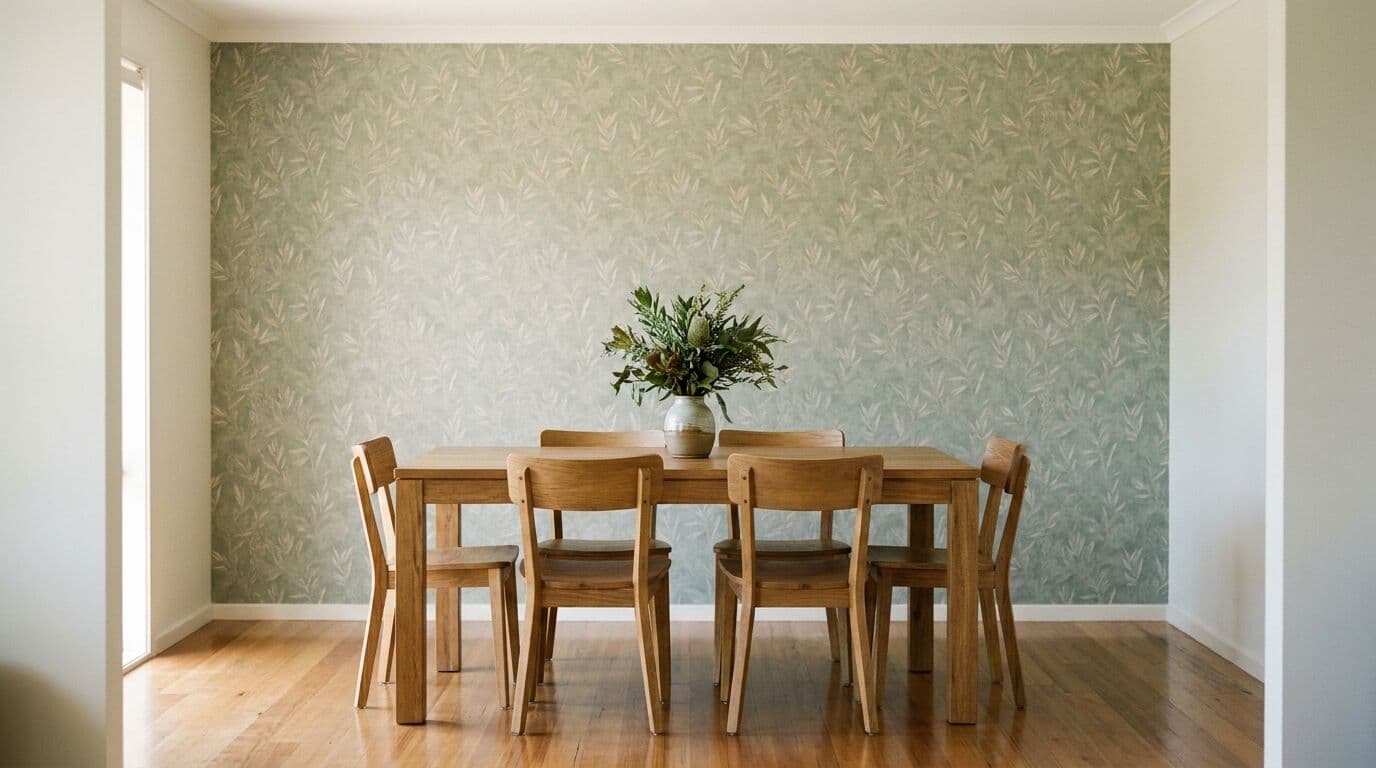
- Botanical and nature-inspired prints. Not the loud florals of decades past. These are muted, large-scale designs in earthy tones that suit the Central West landscape. Think eucalyptus leaves, native grasses, and abstract organic shapes.
Why Textured Wallpaper Works in the Central West Climate
One of the questions I get asked most is whether wallpaper holds up in our conditions. At 862 metres elevation, Orange and the surrounding towns experience genuine extremes. We get frost for five to eight months of the year, summer temperatures regularly push past 35 degrees, and the UV is punishing. That creates a unique set of challenges for any wall covering.
The good news is that modern textured wallpapers handle these conditions well, provided they are installed correctly. The key is moisture management. In our cold winters, condensation can build up on poorly insulated exterior walls. If you wallpaper directly over a damp or cold wall, you are asking for trouble. Mould can develop behind the paper within a single winter season, and by the time you notice it, the paper is ruined and the wall underneath needs treatment.
This is where proper preparation makes all the difference. Before any wallpaper goes up, the wall surface needs to be assessed for moisture, repaired if necessary, sealed with an appropriate primer, and then sized with a wallpaper-specific product. On exterior walls, I sometimes recommend a moisture barrier primer before the sizing coat. This preparation adds half a day to a day to the job, but it is the difference between wallpaper that lasts two years and wallpaper that lasts twenty.
Where to Use Textured Wallpaper (and Where to Avoid It)
I always recommend textured wallpaper as a feature element rather than covering every wall in a room. One accent wall behind a bed, a dining room focal point, or an entry hallway can completely transform a space without overwhelming it. The cost for a single feature wall typically runs between $400 and $900 including materials and professional installation, depending on the wallpaper you choose and the condition of the wall.
There are places I steer people away from wallpaper, even the modern products. Bathrooms with poor ventilation are risky. Laundries are generally a no. Behind wood heaters or close to fireplaces, which are common in Bathurst and Orange homes, the heat and soot make wallpaper impractical. For these areas, a good quality interior paint finish from Dulux, applied over proper preparation, is still the best option.
Kitchens are a grey area. You can wallpaper a kitchen feature wall that is away from the stove and sink, but I would not put grasscloth or any natural fibre product near cooking areas. A wipeable vinyl textured paper can work behind open shelving or in a breakfast nook, but for splashbacks and areas near moisture, stick with paint or tiles.
Combining Wallpaper with Paint for the Best Result
The most successful wallpaper jobs I do combine the textured feature wall with carefully chosen paint on the remaining walls. This is where colour selection becomes critical. The paint needs to complement the wallpaper without competing with it. I usually pull a colour from the wallpaper itself and have Dulux colour-match it for the surrounding walls.
For grasscloth in natural tones, I often pair it with Dulux Natural White or Dulux Antique White U.S.A. on the adjacent walls. For deeper, moodier wallpapers, something like Dulux Limed White or a soft warm grey provides balance. The trick is keeping the surrounding walls quieter than the feature wall so the texture gets the attention it deserves.
I supervise every wallpaper and painting job personally, and this colour coordination is one of the reasons why. Getting the balance wrong can make a beautiful wallpaper look out of place. Getting it right makes the whole room feel considered and pulled together.
What Professional Wallpaper Installation Involves
A lot of people ask me about the process, so here is what a typical textured wallpaper job looks like from start to finish.
- Wall assessment and preparation (half a day to one day). We check the walls for cracks, moisture, flaking paint, and uneven surfaces. Any issues get repaired and sanded smooth. The wall is then primed and sized. This step is non-negotiable if you want the paper to last.
- Wallpaper hanging (one day for a feature wall, two to three days for a full room). We measure, cut, and match patterns carefully. With textured papers like grasscloth, each drop needs to be checked for colour variation and hung in the right sequence. Rushing this step shows up immediately in the finished result.
- Trim and finishing. Edges around power points, light switches, windows, and doors are trimmed precisely. Seams are rolled and any adhesive residue is cleaned. We then touch up the adjacent painted walls to make sure everything looks seamless.
For a single feature wall in a standard bedroom, you are looking at one to one and a half days total. A full room with four walls of textured wallpaper takes three to four days. These timeframes assume the walls are in reasonable condition. Older homes in Carcoar or Blayney with original plaster walls may need additional preparation time.
Wallpaper Removal: What About the Next Owners?
This is a fair question, and one that puts some people off wallpaper entirely. Modern paste-the-wall products are designed to be strippable, meaning they peel off in full sheets when the time comes. This is a world away from the old papers that had to be soaked, scored, and scraped off in tiny fragments. If the wall was properly prepared and primed before hanging, removal is straightforward. The wall underneath should need only light sanding and a fresh coat of primer before repainting or re-papering.
Is Textured Wallpaper Worth the Investment?
In my experience, yes. A well-chosen textured wallpaper on a feature wall adds a sense of quality and thoughtfulness to a room that paint alone cannot replicate. It creates visual interest, adds warmth, and gives a room personality. For homeowners in Orange, Bathurst, and surrounding towns who are renovating heritage homes, building new, or simply refreshing a tired room, textured wallpaper is an option worth seriously considering.
The cost sits between paint (cheaper) and full decorative plaster or panelling (more expensive), making it a mid-range option that delivers high-end results. Budget roughly $400 to $900 for a professional feature wall, or $2,000 to $4,500 for a full room depending on the paper and wall condition.
If you are thinking about adding textured wallpaper to your home, or you want advice on combining wallpaper with a fresh paint job, get in touch with Murrays Painting for a free quote. We handle everything from wall preparation to wallpaper installation and painting, and I personally supervise every job to make sure the finished result is something you will be happy with for years to come.