Fence painting and staining in NSW typically costs between $15 and $40 per linear metre, depending on the fence type, its condition, and whether you choose paint or stain. For a standard 30-metre timber paling fence in Orange or Bathurst, expect to pay roughly $600 to $1,200 for a professional job including preparation, priming, and two coats.
Those numbers surprise some people. They assume a fence is a quick weekend job. And it can be, if you do not mind peeling paint within eighteen months and bare timber exposed to Central West frost by the following winter. I have been painting fences across Orange,Bathurst, Millthorpe, Blayney, and Carcoar for over fifty years, and I can tell you the difference between a fence that lasts three years and one that lasts ten comes down to preparation and product choice, not how fast someone can roll paint onto palings.
What Drives the Cost of Fence Painting
The price per metre varies because no two fences are the same. Here are the main factors that push the cost up or down.
- Fence type: A simple flat paling fence is the most straightforward to paint. Picket fences take longer because of all the individual edges and gaps. Lapped timber fences have overlapping boards that need paint worked into every joint. Post and rail with wire is quick. Hardwood slat screens are slow and fiddly.
- Fence height: A standard 1.8-metre fence is the baseline for most quotes. Anything taller means ladders, more paint, and more time. A 2.4-metre boundary fence can cost 30 to 40 per cent more per metre than a standard height.
- Condition: New timber that has never been coated is the easiest to work with. Weathered timber that has gone grey needs sanding or chemical treatment to open the grain. Old fences with flaking paint need scraping, sanding, and sometimes spot priming before any topcoat goes on.
- Access: If I can walk freely along both sides of the fence, the job moves quickly. If one side backs onto a garden bed, a retaining wall, or the neighbour's shed, it slows things down and adds to the cost.
- Paint versus stain: This is a bigger decision than most people realise, and I will cover it in detail below.
Paint or Stain: Which Is Better for Your Fence
This is the question I get asked more than any other when it comes to fences. The honest answer is that both work well, but they do different things and suit different situations.
Exterior paint sits on top of the timber as a solid film. It gives you full colour coverage, hides imperfections, and provides a thick barrier against moisture and UV. I use Dulux Weathershield for most exterior fence work because it handles the Central West climate well. The UV resistance is critical up here at 862 metres elevation, where the sun hammers surfaces harder than it does at sea level. A properly applied paint system with primer and two topcoats will last seven to ten years on a fence before it needs recoating.
Timber stain soaks into the grain rather than sitting on top. It enhances the natural look of the timber, which many people prefer for hardwood or feature fences. Stains come in transparent, semi-transparent, and solid options. The trade-off is durability. A transparent stain on a fence in Orange, where we get frost five to eight months of the year and summer temperatures past 35 degrees, will typically need refreshing every two to four years. Semi-transparent stains last a bit longer, around three to five years. Solid stains perform closer to paint.
The advantage of stain is that when it does need redoing, the preparation is much simpler. Stain does not peel or flake the way paint can. You clean the fence, lightly sand any rough spots, and apply a fresh coat. With paint, if it starts to fail, you are back to scraping and priming before you can recoat.
Typical Cost Ranges for Central West NSW
These are the price ranges I work within for residential fence painting and staining in Orange and the surrounding towns. Every job gets a specific quote based on an inspection, but these figures give you a realistic starting point.
- Standard timber paling fence (paint, both sides): $20 to $35 per linear metre. This includes washing, light sanding, spot priming, and two coats of quality exterior paint.
- Standard timber paling fence (stain, both sides): $15 to $28 per linear metre. Stain is generally quicker to apply but the product cost is comparable.
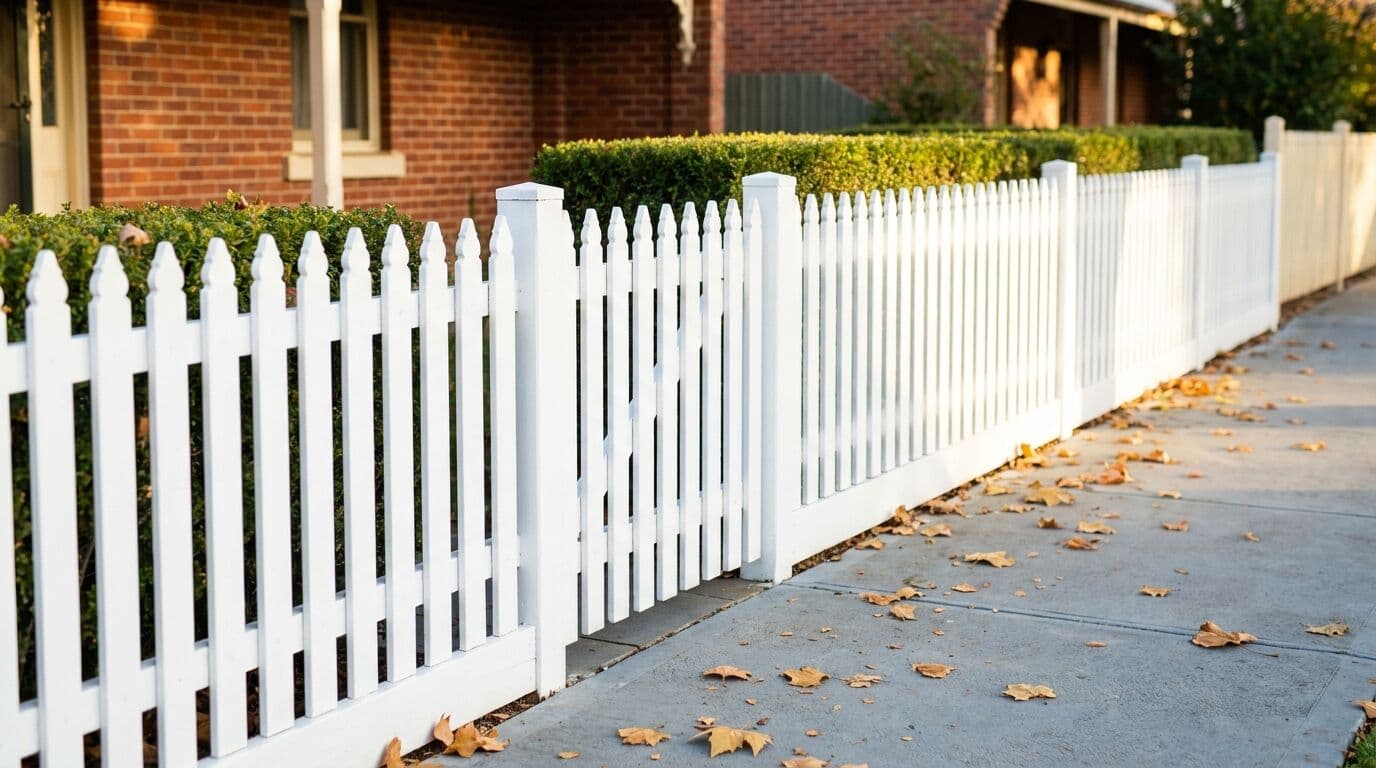
- Picket fence (paint, both sides): $30 to $45 per linear metre. The individual pickets, posts, and rails all need separate attention.
- Hardwood slat screen (stain): $25 to $40 per linear metre. These feature fences require careful, even application to avoid lap marks on the smooth timber.
- New fence (first coat, paint or stain): $15 to $25 per linear metre. New timber is clean, smooth, and does not need repair or stripping.
- Old fence requiring heavy preparation: Add $8 to $15 per linear metre on top of the standard rate. Stripping old coatings, replacing damaged palings, and extensive sanding all add to the time and cost.
For a typical residential property in Orange or Bathurst with 40 to 60 metres of boundary fencing, a full paint job usually comes in between $900 and $1,800 depending on the factors listed above.
Why Preparation Is Where the Money Goes
I tell every customer the same thing. You are not paying me to roll paint onto timber. You are paying me to prepare that timber so the paint actually sticks and lasts. On a fence that has been sitting in the Central West weather for ten or fifteen years, preparation can take longer than the painting itself.
Here is what proper preparation looks like on a weathered fence.
- Washing: Every fence gets pressure washed or hand scrubbed to remove dirt, mould, and loose material. Mould is common on south-facing fences in Orange, where moisture sits in the shade and frost keeps things damp for months at a time.
- Drying time: The timber needs to dry completely before any coating goes on. In summer that might be a day. In autumn it could be two or three days. Rushing this step is one of the most common mistakes I see.
- Sanding and scraping: Any flaking old paint gets scraped back to a firm edge. Weathered grey timber gets sanded to expose fresh wood. This is dusty, slow work, but it is where adhesion is won or lost.
- Repairs: Loose palings get re-nailed. Split boards get replaced. Posts that are leaning or rotten at the base get flagged. I would rather tell you a post needs replacing before I paint it than have it fall over six months later with fresh paint on it.
- Priming: Bare timber and repaired areas get a coat of quality primer. This is not optional. Without primer, your topcoat is trying to bond directly to raw wood, and in our climate that bond will not hold.
DIY Versus Professional: The Real Difference
I am not going to tell you that you cannot paint your own fence. You can. Plenty of people do, and for a simple paling fence with a roller and a tin of fence paint from the hardware store, the result can be perfectly adequate for a few years.
Where the gap shows up is in longevity and finish. A professional job using Dulux exterior products with proper preparation and two full coats will last two to three times longer than a single coat of budget fence paint slapped on over dirty timber. When you divide the cost by the number of years the job lasts, professional painting usually works out cheaper per year.
There is also the time factor. A 40-metre fence sounds manageable until you are on your hands and knees at the bottom of palings on a Saturday afternoon, trying to get paint into every gap while your back is telling you this was a terrible idea. A two-person crew can complete the same fence in a day or two, with all the preparation done properly.
Climate Considerations for Central West Fences
Fences cop more weather punishment than almost any other surface on your property. They have no eaves protecting them, no insulation behind them, and both sides are fully exposed. In the Central West, that means dealing with conditions that would test any coating system.
Our frost season runs five to eight months depending on the year. That repeated cycle of freezing overnight and thawing during the day works moisture in and out of timber joints constantly. If the paint film has any weakness, frost will find it. I have seen fences in Millthorpe where the south-facing side has failed completely while the north-facing side still looks fresh, simply because of the frost and shade difference.
In summer, when temperatures push past 35 degrees, unpainted or poorly maintained timber dries out, cracks, and splits. The UV at our elevation accelerates this dramatically. A good paint or stain system acts as sunscreen for your timber, slowing that degradation and keeping the fence structurally sound for years longer.
When to Paint Your Fence
The best time for fence painting in the Central West is autumn, from March through to mid May, or spring, from mid September through November. These windows give us consistent temperatures between 15 and 28 degrees, which is where exterior coatings cure properly. Summer is workable on milder days, but we avoid painting fences in full sun when surface temperatures climb above 35 degrees. Winter is off the table for exterior work up here.
If your fence is looking tired right now, the best time to start planning is a few months before the next good painting window. That gives us time to inspect the fence, quote the job, and schedule it when conditions are right.
Get a Free Quote From Murrays Painting
Every fence is different, and the only way to get an accurate price is for us to come and look at it. We offer free, no-obligation quotes across Orange, Bathurst, Millthorpe, Blayney, Carcoar, and the wider Central West. I will walk the fence with you, talk through the options for paint or stain, and give you a clear price with no surprises. All our work is owner-supervised and we use quality Dulux products on every job. Give Murrays Painting a call or fill out the enquiry form on our website to book your free quote.