Decks and fences take more punishment than any other timber on your property. They sit exposed to everything the Central West throws at them, from frost cycles that last five to eight months through to summer UV that pushes past 35 degrees. If you want them to last, you need a maintenance plan. After fifty years of looking after timber across Orange, Bathurst, and Millthorpe, I can tell you exactly what works and what does not.
The general rule is simple. Re-stain or re-oil your deck every two to three years, and your fences every three to four years. But those numbers shift depending on the timber species, the product you use, and how much weather exposure it gets. A north-facing deck in Orange that hosts weekend barbecues needs attention sooner than a side fence in Millthorpe sitting under a mature tree canopy.
Why Central West Conditions Are Hard on Timber
Living at 862 metres above sea level changes everything about how timber ages. Coastal homeowners deal with salt and humidity. Up here, we deal with extreme temperature swings, relentless UV, and frost that gets into every crack and split it finds. A single winter in Orange can put more stress on an unprotected deck than three years of coastal weather.
Here is what your timber is up against:
- Frost and freeze-thaw cycles: Water gets into the grain of exposed timber, freezes overnight, and expands. Over five to eight months of frost, this splits fibres, lifts coatings, and opens up cracks that let more water in the following year. It is a cycle that accelerates fast if you do not stay on top of it.
- UV exposure: At our elevation, UV intensity is significantly higher than at sea level. Unprotected timber goes grey within six to twelve months as the lignin breaks down. Even stained timber fades faster up here than on the coast.
- Summer heat: Days past 35 degrees dry timber out rapidly. Boards shrink, gaps open up, and existing coatings crack as the timber moves.
- Rain and moisture: Water pooling on a deck surface, or sitting against fence palings at ground level, is where rot starts. Proper drainage and a sound coating are your best defence.
Deck Maintenance: What to Do and When
A well-maintained deck should last twenty to thirty years. A neglected one can need replacing in under ten. The difference comes down to consistent care, good products, and proper preparation every time you re-coat.
Annual inspection. Walk your deck in autumn, before the frost season. Look for boards that have cupped, warped, or split. Check the fixings. If water no longer beads on the surface and instead soaks straight in, the protection has broken down and it is time to re-coat.
Cleaning. Give your deck a good clean at least once a year. A stiff broom and a garden hose will handle general dirt. For mould or stubborn grime, use a dedicated deck wash product. Avoid high-pressure washing on softwood decking like treated pine, as it can damage the fibres.
Re-coating every two to three years. The preparation before applying a new coat is more important than the product itself. I tell every client the same thing: preparation is 80 per cent of the job. A proper deck re-coat involves:
- Washing and drying: Clean the entire surface and allow it to dry completely. In autumn conditions around Orange, that usually means 24 to 48 hours after washing.
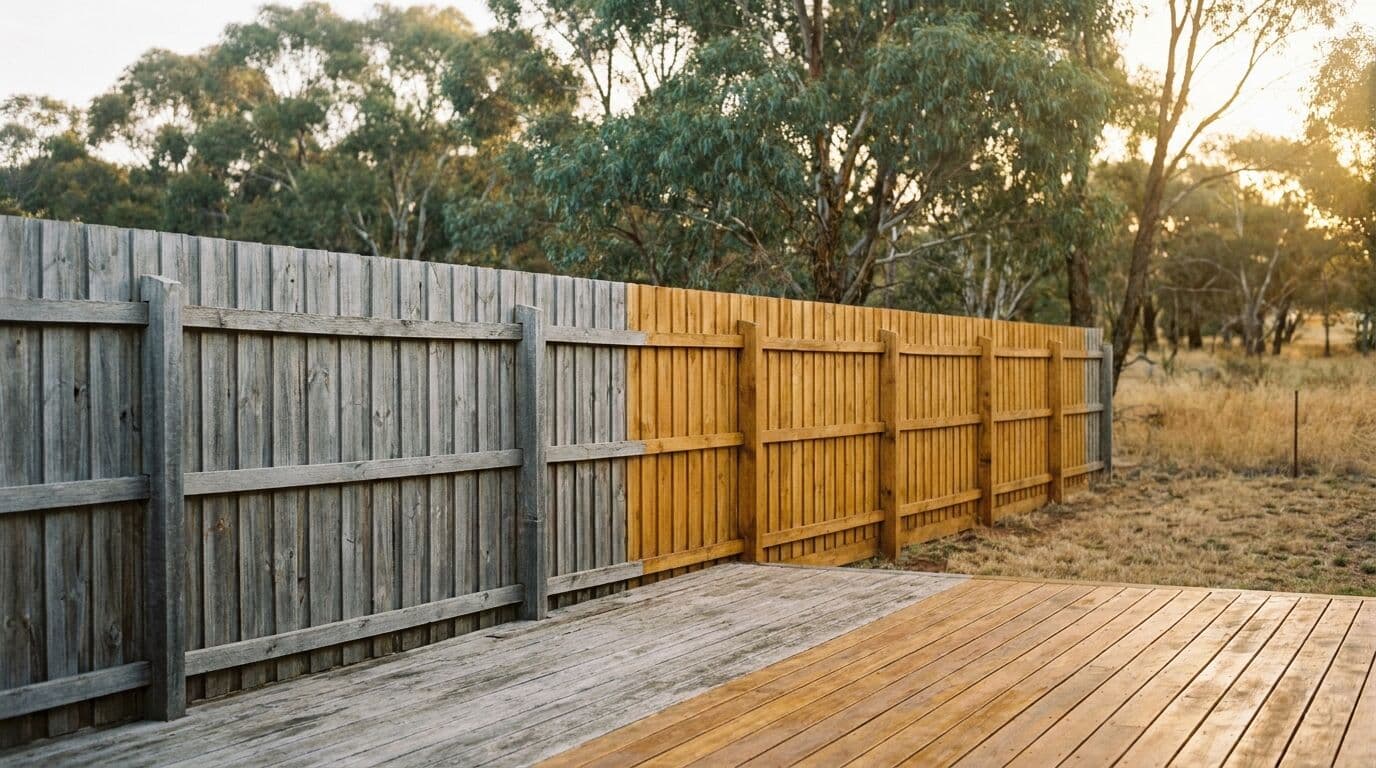
- Sanding: Sand the deck with 80 to 120 grit to remove the old coating, open the timber grain, and create a surface the new product can penetrate into. This step is non-negotiable. Applying new stain over old, degraded product is the most common mistake, and it leads to peeling and flaking within twelve months.
- Repairs: Replace any boards that are split, rotten, or structurally compromised. Fill small cracks with a flexible exterior filler. Re-set any popped nails or replace them with screws.
- Application: Apply two coats of a quality decking oil or stain. We use Dulux Intergrain products for most deck work because they penetrate the timber rather than sitting on top of it. Penetrating products handle the timber movement that comes with our temperature swings far better than film-forming coatings, which tend to crack and peel in inland conditions.
Fence Maintenance: Longer Intervals but the Same Principles
Fences do not get foot traffic, so they generally last longer between coats. Every three to four years is a reasonable schedule for most timber fences in the Central West, though the aspect matters. A west-facing fence in Bathurst that cops afternoon sun all summer will degrade faster than an east-facing fence that gets morning light only.
The biggest issue with fences is ground contact. The bottom of your palings, where they sit close to or touching the soil, is where rot starts. Pay extra attention to the bottom 150mm when you inspect and re-coat. For fence maintenance, follow these steps:
- Clear vegetation: Pull back any plants, vines, or grass growing against the fence. Vegetation traps moisture and blocks airflow, which accelerates rot and encourages mould.
- Wash and treat mould: A diluted bleach solution or a purpose-made timber cleaner will deal with mould and algae. Rinse thoroughly and allow the fence to dry completely.
- Sand or scrape: Remove any flaking or peeling coating. On a long fence run, this is where the time goes. A properly prepared fence takes a new coat beautifully. A poorly prepared one looks patchy within a year.
- Apply stain or paint: For natural timber fences, a semi-transparent stain shows the grain while providing UV and moisture protection. For paling fences you want to look solid, an exterior acrylic in a colour from the Dulux Weathershield range gives excellent coverage and durability. Two coats minimum, paying special attention to end grain and the bottom of palings.
Choosing the Right Product
Not all stains and oils are the same, and what works on the coast does not always work up here. After testing dozens of products on Central West homes over the years, I keep coming back to a handful that perform consistently in our conditions.
For decks, a penetrating oil like Dulux Intergrain UltraDeck is my first recommendation. These products soak into the timber and provide UV protection without forming a hard film. When they eventually wear, they fade evenly rather than cracking or peeling, which makes re-coating simpler.
For fences, the choice depends on the look you want. Dulux Intergrain Natures Timber stain works well for a natural finish. If you want a solid colour, Dulux Weathershield exterior acrylic is hard to beat. On vertical surfaces like fence palings, a film-forming paint holds up much better than it does on a horizontal deck that cops foot traffic and pooling water.
When to Call a Professional
Small decks and short fence runs are manageable as a weekend project if you are comfortable with a sander and willing to do the preparation properly. But there are situations where calling a professional makes a real difference.
- Large or elevated decks: Anything over 30 square metres or more than a metre off the ground involves serious preparation time and safety considerations.
- Timber in poor condition: If your deck or fence has rot or structural damage, you need someone who can assess what needs replacing and what can be saved.
- Hardwood decks: Merbau, spotted gum, and blackbutt have natural oils and tannins that affect how coatings adhere. Getting the preparation wrong means the stain sits on top and peels off within months.
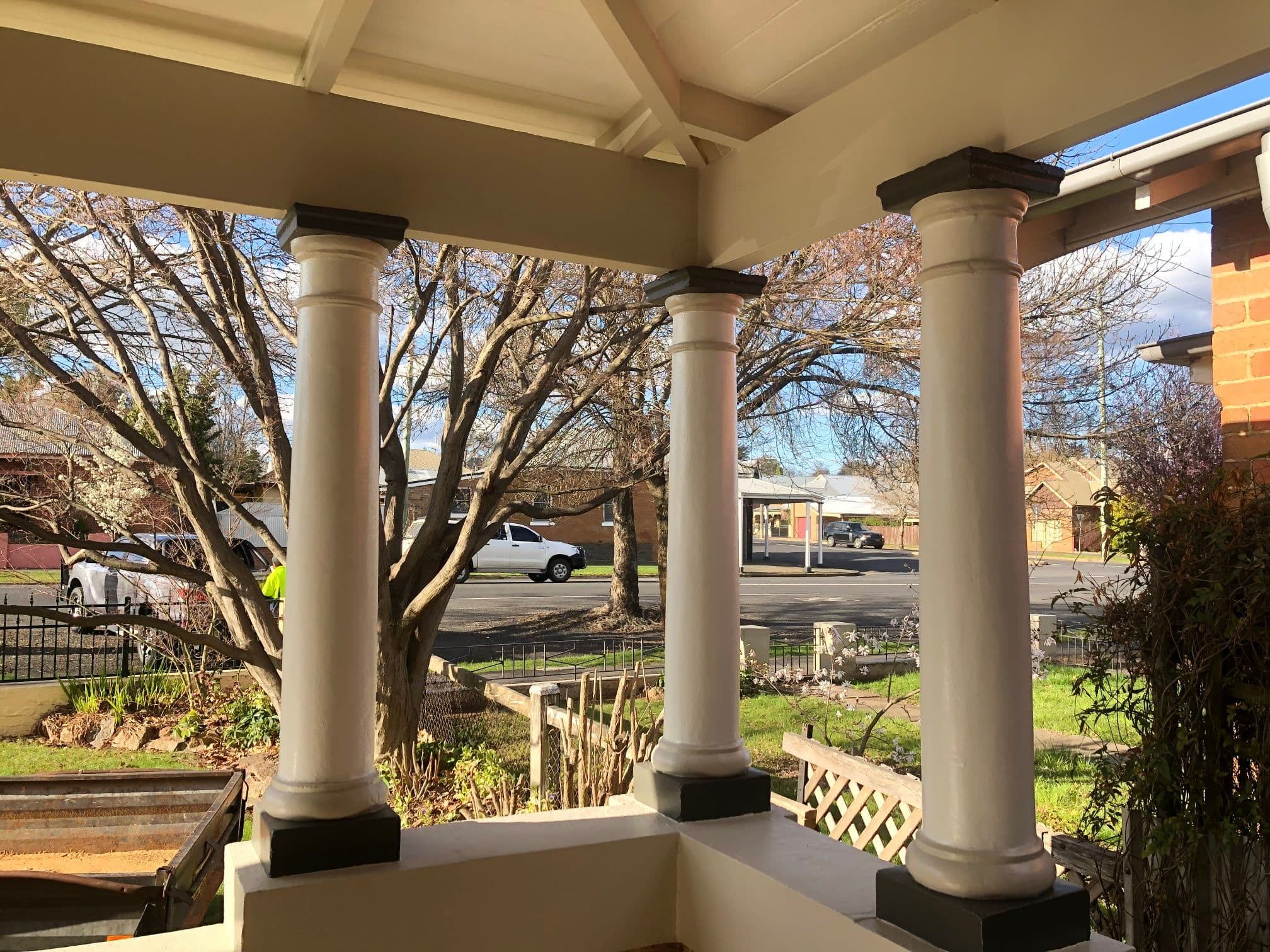
- Heritage properties: Older homes in Millthorpe and around the Central West often have original verandah decking that needs careful treatmentto preserve timber that has stood for over a hundred years.
A Simple Maintenance Calendar
Timber maintenance is not complicated, but it does need to be consistent. Inspect decks and fences every autumn, looking for damage and testing the coating by splashing water on the surface. Clean your deck thoroughly each spring after winter. Re-oil or re-stain your deck every two to three years, and re-coat fences every three to four years. Autumn is ideal for both. A hardwood deck on this schedule can last thirty years or more.
I personally supervise every job we take on, whether it is a full deck restoration or a fence refresh. That owner supervision means the preparation is done right, the product is applied correctly, and the finish will last. We use Dulux products because they perform in our conditions, and we apply them the way they are designed to be used.
Murrays Painting offers free quotes for deck and fence maintenance across the Central West. If your timber is looking tired, give us a call. I will come out, walk around your property with you, and give you honest advice on what needs doing and what can wait. No pressure, no obligation. Just practical advice from someone who has been looking after timber in this part of the world for over fifty years.