Commercial painting in regional NSW typically costs between $15 and $45 per square metre, depending on the type of building, the condition of existing surfaces, and how much preparation is needed. For offices in Orange or Bathurst, you are usually looking at $20 to $35 per square metre for interior walls and ceilings. Warehouses tend to sit lower, around $15 to $25, because the finishes are simpler. Retail fitouts sit at the higher end, $30 to $45, because the finish quality has to be spot on.
Those numbers come from more than fifty years of quoting and completing commercial jobs across the Central West. Every building is different, and I will walk you through what actually drives the price so you can budget with confidence.
Why Commercial Painting Costs Vary So Much
The biggest variable in any commercial painting quote is not the paint itself. It is the preparation. A newly built office in Millthorpe with fresh plasterboard is a completely different job to repainting a fifty-year-old warehouse in Blayney where the existing coating is flaking off galvanised steel.
Here is what affects pricing the most:
- Surface condition. New surfaces need a sealer and two coats. Old surfaces might need stripping, sanding, patching, rust treatment, or mould removal before paint even goes near them. On a rough warehouse wall, preparation can take longer than the painting itself.
- Height and access. Single-storey offices are straightforward. A warehouse with six-metre ceilings means scaffolding or elevated work platforms, which adds cost for hire and setup time, plus the safety procedures that go with working at height.
- Type of finish. A warehouse might get a single coat of industrial enamel over a primer. A retail shopfront in the main street of Orange needs a flawless, even finish that looks sharp under display lighting. That takes more coats, better paint, and more careful application.
- Working hours. Many commercial jobs need to happen outside business hours. If you need us painting your Bathurst retail space between 6pm and midnight so you can trade the next day, that affects scheduling and crew logistics.
- Paint specification. We use Dulux commercial products almost exclusively. There is a big difference between Dulux Wash & Wear for a standard office and Dulux Protective Coatings for an industrial environment. The product has to match the application, and commercial-grade coatings cost more per litre but last significantly longer.
Office Painting: What to Expect
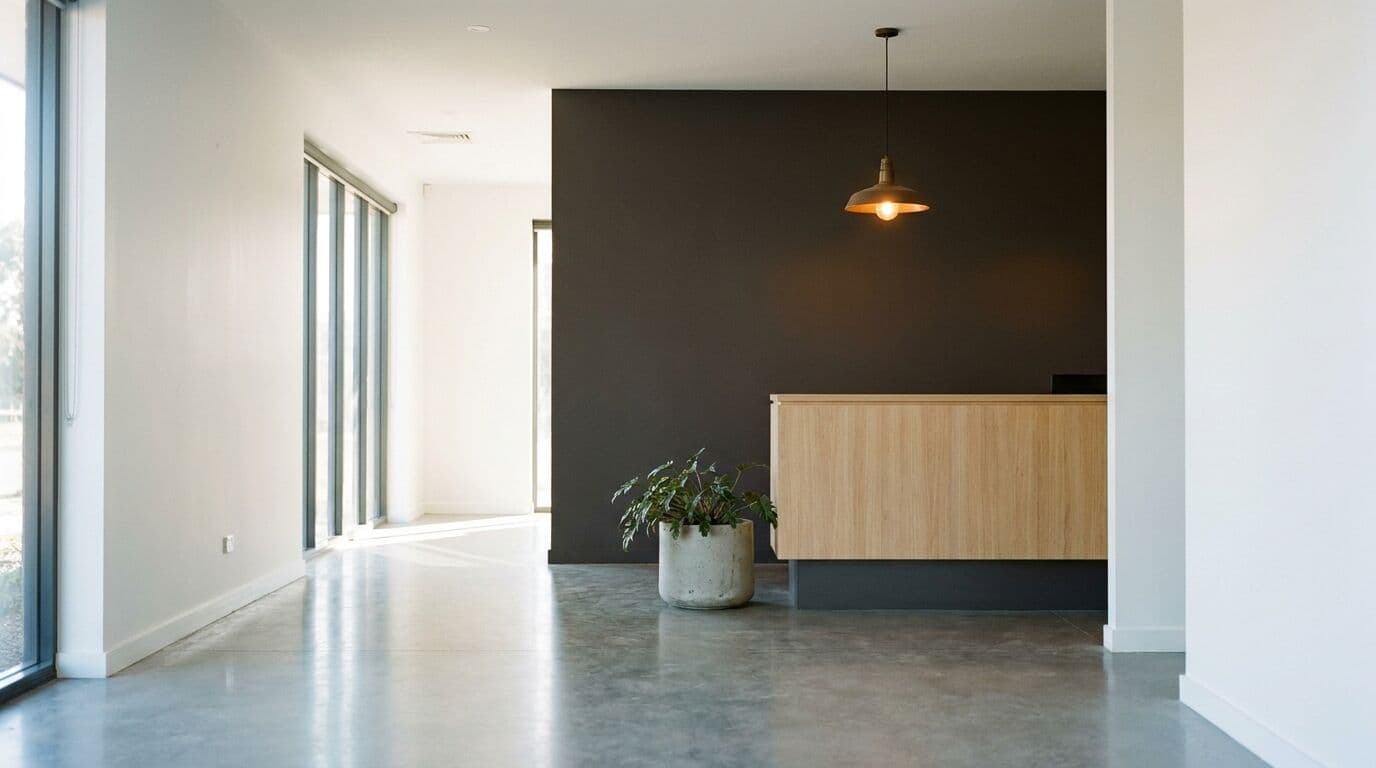
Office repaints are our most common commercial work. Businesses across Orange, Bathurst, and Blayney book us when their walls start looking tired, when they are refitting after a new lease, or when they want to update colours to match a rebrand.
For a standard office repaint with walls in reasonable condition, expect to pay between$20 and $35 per square metre. A typical 200 square metre office space usually comes in between $4,000 and $7,000 depending on the number of rooms, ceiling height, and how much cutting in is needed around joinery and fixtures.
Preparation for offices usually involves washing walls, filling minor cracks and nail holes, sanding patches smooth, and taping off trim. If the existing paint is in good shape, two coats of Dulux Wash & Wear over the existing surface gives a clean, durable result. If there is water damage, nicotine staining, or significant marks, we will seal first with a stain-blocking primer.
Most office jobs take two to five days depending on size. We work around your team wherever possible, doing one section at a time so you do not have to shut down entirely. I have painted medical practices in Orange where we did one consulting room per night so the doctors never missed a day.
Warehouse and Industrial Painting
Warehouses and industrial buildings across the Central West cop a hiding from the climate. At 862 metres elevation, we get frost for five to eight months of the year, summer temperatures past 35 degrees, and UV that breaks down coatings faster than coastal areas might expect. Steel structures in particular suffer, with condensation forming on cold mornings and accelerating rust.
Interior warehouse painting generally runs $15 to $25 per square metre. That lower price reflects simpler finishes, but do not mistake simple for easy. Industrial painting demands thorough preparation, especially on metal surfaces. We spend significant time wire brushing, sanding back rust, and applying rust converter before the primer coat goes on.
Exterior industrial painting costs more, typically $25 to $40 per square metre, because of access requirements, weather exposure, and the need for UV-stable, weather-resistant coating systems. A full warehouse exterior in Carcoar or Blayney might involve a three-coat system: etch primer, intermediate coat, and a high-build topcoat from the Dulux Protective Coatings range.
Floor coatings are a separate consideration. Epoxy floor systems for warehouse and workshop floors typically run $40 to $80 per square metre depending on the system. That includes grinding the concrete, applying the epoxy base, and finishing with a non-slip topcoat.
Retail Fitout Painting
Retail painting is where finish quality matters most. When customers walk into your shop on Summer Street in Orange or down William Street in Bathurst, the walls and ceiling are part of the first impression. Scuffs, roller marks, or uneven colour are not acceptable.
Retail painting typically costs $30 to $45 per square metre. The premium reflects several things: more coats for a flawless finish (often three coats instead of two), careful masking of display fittings and fixtures, feature walls that might involve different colours or specialty finishes, and the tight timelines that retail fitouts demand.
A 100 square metre retail space might cost $3,000 to $4,500 for a full repaint. New fitouts are often slightly more because there is primer, plus two or three topcoats, plus all the detailed work around shelving, counters, and signage areas.
We have painted cafes, clothing stores, professional offices, and shopfronts throughout the region. One thing I always tell retail clients: spend the money on proper preparation and good paint now. You will not be repainting for seven to ten years if we do it right, and that saves you far more than cutting corners ever would.
The Climate Factor in Commercial Painting
Regional NSW is not like painting in Sydney or on the coast. Our climate up here in the Central West creates specific challenges that affect both timing and product selection for commercial work.
The frost season limits exterior commercial painting to roughly October through April. Even then, morning temperatures can sit below 10 degrees until mid-morning, which means exterior coats need to go on after the dew has dried and the surface temperature is above the paint manufacturer's minimum. Dulux specifies a minimum of 10 degrees for most exterior products, and we check surface temperature with an infrared thermometer before every coat.
Summer brings the opposite problem. On days above 35 degrees, paint dries too fast on sun-exposed surfaces. That causes lap marks, poor adhesion, and a finish that looks fine for six months then starts to crack. We plan our work around the building, following the shade so the paint has time to level and cure properly.
Interior commercial work is less affected by climate, which is one reason we schedule warehouse and office interiors through winter when exterior work slows down. That said, unheated warehouses in Carcoar or Blayney can get cold enough inside to cause problems. We monitor interior temperatures and will hold off if a building is too cold for proper curing.
What a Good Commercial Quote Should Include
When you are comparing quotes for commercial painting, look for these details:
- Specific preparation steps listed out, not just "preparation as required." You want to know exactly what the painter plans to do before paint goes on.
- Paint brand and product names. We list the exact Dulux products for every job. If a quote just says "two coats of acrylic," that tells you nothing about what you are actually getting.
- Number of coats for each surface type. Primer plus two topcoats is standard for most commercial work. One coat over old paint is a recipe for early failure.
- Timeline and access arrangements. A clear schedule showing when the crew will be on site and what areas they will be working in each day.
- Who supervises the job. At Murrays Painting, I personally supervise every commercial project. Owner-supervised means quality control from start to finish, not a crew left unsupervised to cut corners.
Saving Money Without Cutting Corners
There are legitimate ways to keep commercial painting costs down. Schedule interior work during winter when painters are less busy. Combine multiple areas or buildings into a single job so mobilisation costs are spread across a bigger project. Keep surfaces in reasonable condition between paints so preparation is less intensive next time around.
What you should not do is choose the cheapest quote without checking what it actually includes. I have been called in to fix commercial paint jobs done by operators who skipped preparation, used cheap paint, and left the client with walls that looked fine for three months and then started peeling. Repainting costs twice as much when you have to strip failed coatings first.
If you are planning a commercial painting project anywhere in the Central West, from a small office in Millthorpe to a large warehouse complex in Bathurst, Murrays Painting offers free, detailed quotes with no obligation. I will come out, inspect the surfaces, discuss what you need, and give you an honest price with everything spelled out. Give us a call or fill out the form on our website, and we will get back to you promptly.