After more than twenty years of painting homes across Orange, Bathurst, and the Central West, I can tell you the single biggest factor in how long your exterior paint job lasts. It is not the brand of paint. It is not the colour. It is when the paint goes on.
I have watched perfectly good paint fail within two years because it was applied on the wrong day. And I have seen budget paint last a decade because the timing and preparation were right. If you are thinking about painting the outside of your house in Central West NSW, this is what you need to know before you book anyone.
Why Timing Matters More Than Paint Brand
Every tin of exterior paint has a recommended application temperature printed on it, usually somewhere between 10 and 35 degrees Celsius. Most people glance at that and move on. But up here at 862 metres elevation, those numbers matter more than almost anywhere else in Australia.
Paint is not just a liquid that dries. It is a chemical process. When you brush or roll paint onto a surface, the resins and binders need to coalesce into a continuous, flexible film. That process is called curing, and it is entirely dependent on temperature.
- Below 10 degrees Celsius: The paint cannot cure properly. The binders never fully knit together, leaving a film that looks fine at first but is brittle, chalky, and prone to peeling. It will fail within one to two years no matter what brand you used.
- Above 35 degrees Celsius: The paint dries too fast. The surface skins over before the film can form properly underneath. You get poor adhesion, visible brush marks, and cracking as the trapped solvents try to escape. Again, premature failure.
- The sweet spot, 15 to 30 degrees Celsius: This is where paint does its best work. The film forms evenly, the binders coalesce fully, and you get maximum durability and colour retention.
I have had homeowners tell me they got three quotes and picked the cheapest painter who could start immediately in July. Six months later they are calling me to fix peeling paint on a south-facing wall. The paint did not fail. The timing failed.
Orange's Climate: A Painter's Challenge
Orange is not like painting on the coast. We sit at 862 metres above sea level, and that elevation shapes everything about how and when we can paint exteriors. Here is what we are working with.
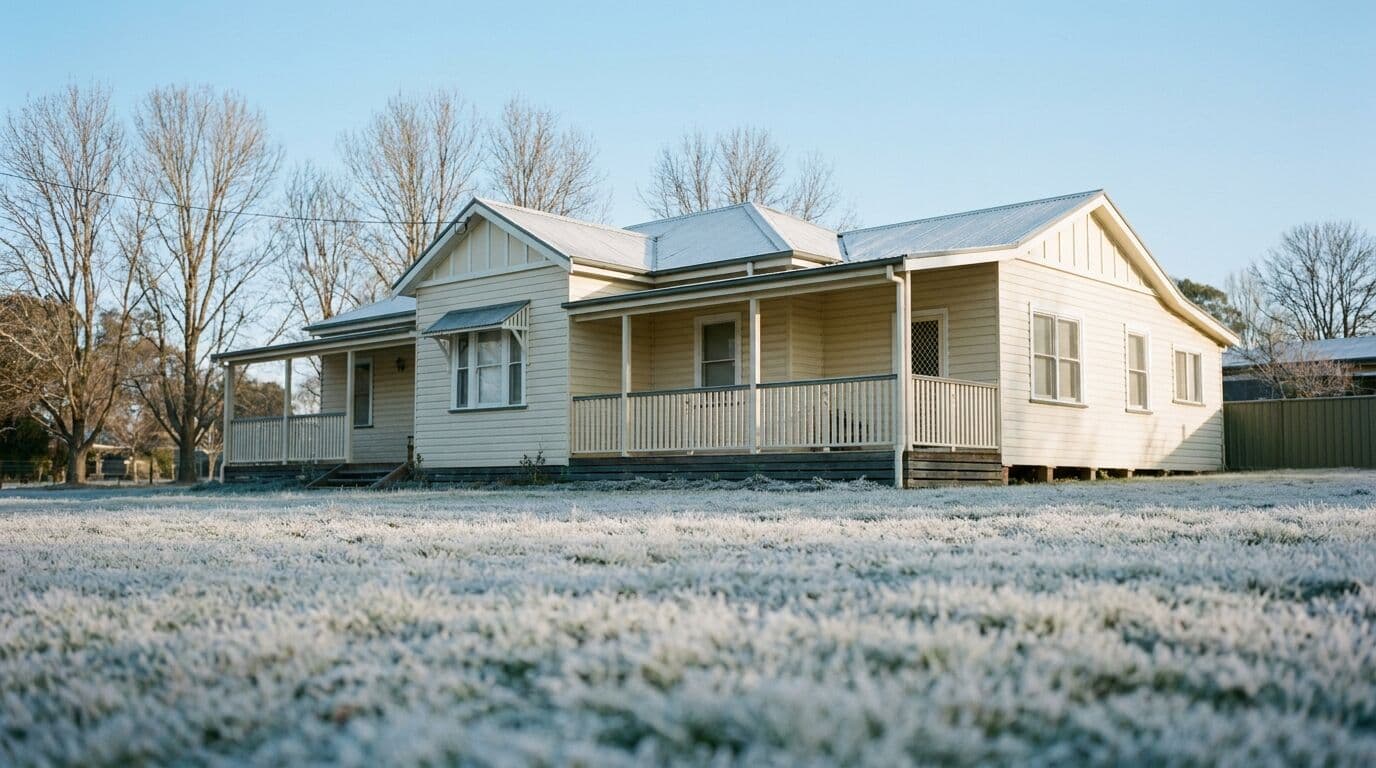
In summer, January averages a maximum of 29.1 degrees, but it regularly pushes past 35. In winter, July averages just 10.8 degrees for the maximum and drops to a minimum of 2.2. We get frost for five to eight months of the year. That is extraordinary for a city of this size and it is something most painters from Sydney or the coast simply do not account for.
On top of that, our UV levels are among the highest in the world, amplified by our elevation. That UV hammers exterior paint films relentlessly, which means the quality of the initial cure is even more critical. A properly cured film can handle the UV. A poorly cured one cannot.
We also average around 524 millimetres of rainfall spread across roughly 140 rain days per year. That is not heavy rain, but it is frequent. On any given week during the painting season, there is a real chance of a shower interrupting exterior work.
Season by Season: What Actually Works
Spring (September to November): The Best Window
Spring is the ideal time for exterior painting in the Central West. Temperatures climb from the mid-teens into the low twenties. Frost starts to ease off, usually by mid to late September, though we keep a close eye on the forecast right through October. Mornings can still be cold, so we often cannot start applying paint to exterior surfaces until mid-morning once everything has warmed and any overnight moisture has evaporated.
The other advantage of spring is daylight. Longer days mean more working hours in that ideal temperature range. By November, we are getting excellent conditions almost every day.
The downside? Everyone else knows spring is the best time too. Good painters book out quickly from September onward, especially with homeowners wanting work finished before Christmas. If you want a spring slot, booking in July or August is not too early.
Autumn (March to May): The Other Ideal Window
Autumn is just as good as spring for exterior painting, and in some ways better. March and April deliver consistently mild temperatures, usually sitting comfortably in the 18 to 25 degree range. The scorching summer days are behind us, and the frost has not yet set in.
I actually prefer autumn for large exterior jobs. The weather is more predictable than spring, and there is less pressure from the Christmas deadline. You also get the benefit of having your home freshly painted and protected before winter hits, which is when UV, frost, and moisture do the most damage to tired exterior surfaces.
By late May, though, morning temperatures start dipping toward single digits. We watch the overnight minimums carefully and make the call day by day on whether exterior work is viable.
Summer (December to February): Workable, With Caution
Summer is not off the table, but it requires careful management. Many days in December and February sit in the mid to high twenties, which is perfectly fine. The problem is those stretches in January where we push past 35 degrees for days at a time.
On those extreme days, we focus on shaded elevations early in the morning and stop applying paint to sun-exposed walls once the surface temperature climbs too high. A wall in direct afternoon sun can reach 50 degrees or more even when the air temperature is only 35. We carry infrared thermometers on every job to check surface temperatures before we start a section.
Summer also brings afternoon thunderstorms. Nothing ruins a fresh coat of paint like an unexpected downpour two hours after application. We keep a close watch on the radar during summer work.
Winter (June to August): Interior Only
I will be straightforward about this. We do not paint exteriors in Orange during winter. The numbers simply do not support it. When your maximum temperature for the day is 10.8 degrees and the overnight minimum is 2.2, there is no window during the day where exterior paint can cure properly.
Even on a sunny winter day where the thermometer might touch 13 or 14 degrees briefly in the early afternoon, the surface you are painting may still be cold from overnight frost. Paint applied to a cold substrate will not cure even if the air feels warm enough.
This is when we move to interior work. Bedrooms, hallways, living areas, kitchens, bathrooms. Interior painting is not weather-dependent as long as the house is reasonably warm and ventilated. Winter is actually a great time to get your interiors done because we have more availability and you are not competing with the spring rush.
How I Schedule Around the Weather
After two decades in the Central West, I have learned not to fight the weather. You work with it or you pay the price, and so does your customer.
My schedule follows a simple pattern. Exterior work is booked for spring and autumn, with some flexibility into early summer and late summer. Interior work fills the winter months and any stretches of bad weather during the warmer seasons. If a cold snap rolls through in October and the forecast shows three days below 12 degrees, we do not push through with exterior work. We pivot to an interior job or focus on preparation tasks like sanding, scraping, and filling that do not involve applying paint to exterior surfaces.
This approach means your job might take a day or two longer than a painter who just pushes through regardless of conditions. But it also means your paint job will last eight to ten years instead of two to three. That is the trade-off, and it is one I am happy to make.
What Happens When Paint Goes On in the Wrong Conditions
I see the results of poorly timed paint jobs regularly. Homeowners call me to repaint a house that was done just two or three years ago. When I inspect the failing paint, the signs are always the same.
- Cold-weather failures: The paint peels in sheets, often taking the primer with it. The film looks chalky and powdery when you rub it. This is uncured paint. The binders never formed a proper film.
- Hot-weather failures: The paint cracks in a pattern that looks like dried mud. The surface feels rough and uneven. You can see where the top layer skinned over while the paint underneath was still wet.
- Moisture failures: Blistering and bubbling, usually on south-facing or shaded walls that had frost or dew on the surface when the paint was applied.
In every case, the fix is the same. Strip it back, prepare the surface properly, and repaint in the right conditions. There are no shortcuts. The homeowner ends up paying twice for a job that should have been done once.
Book the Right Season, Get the Right Result
If you are thinking about painting the exterior of your home in Orange or anywhere in the Central West, the best thing you can do is plan ahead. Autumn and spring slots are in high demand because every experienced local painter knows those are the months that deliver lasting results.
We start taking bookings for spring work from July, and autumn bookings fill from late January onward. If you want your preferred timing, getting in touch early makes a real difference.
And if it is winter right now and you are reading this while looking at your tired exterior walls, do not be tempted to rush into a paint job just because you have found a painter with availability. There is usually a reason they are free in July. Book a spring or autumn slot, and in the meantime, let us take care of your interiors.
Give us a call or fill out the enquiry form to book a free quote. We will come out, assess your home, and recommend the best timing for a result that lasts.